Why Repairability Depends on Moisture, Not Appearance
Can water damage be repaired? What homeowners need to know in Marietta starts with moisture, not looks. A wall or floor that looks fine can hold moisture for days after a leak. Relief Remediation uses moisture measurements to determine what can be saved and what needs to come out.
Most homeowners judge water damage by what they can see. A stain on the ceiling seems to show the full size of the problem. The real answer sits inside the materials.
Drywall and wood soak up water and hold it for days. The surface can dry within a few hours while the core stays wet. That trapped moisture decides if a material can be saved.
We see this mistake often on calls around Marietta.
A homeowner near the Whitlock Hills neighborhood called us after a washing machine hose broke. The laundry room floor looked dry by the next morning. Our moisture meter showed the subfloor at more than twice its normal reading. The water had spread under the vinyl and into the hallway. We caught it on day two. The subfloor dried in place and didn’t need to be replaced.
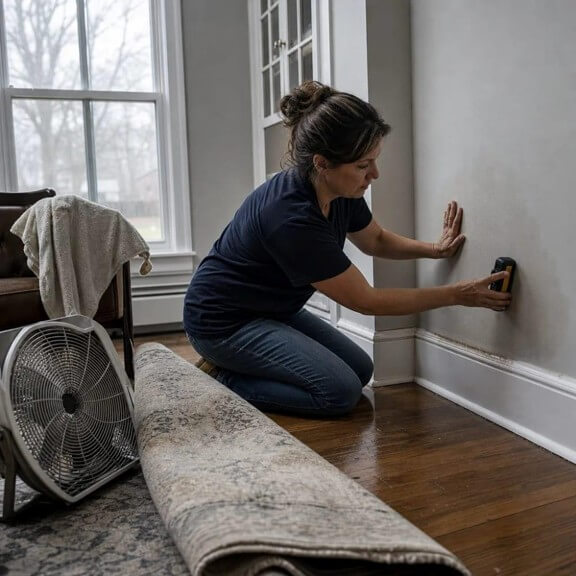
How do you know if your home falls in the savable range? The answer comes from testing each material with the right tools. Moisture readings help us sort damaged materials into clear groups. Each group points to a different repair path.
- Materials that test close to normal levels can be dried in place with fans and dehumidifiers.
- Drywall with high readings near the floor may need a small cut so the wall cavity can dry.
- Carpet pad that stays wet for more than two days gets replaced in most cases.
- Hardwood that has started to cup can flatten again if the boards dry at a steady pace.
- Any material touched by sewage water gets removed to protect your family.
These groups are a starting point. Each home reacts in its own way based on its materials and the water source.
Georgia humidity keeps indoor air damp for much of the year. Wet materials dry slower when the air around them is already full of moisture. Many older homes near Kennesaw Mountain and along Church Street sit on crawl spaces. Water from a leak can settle under the floor where nobody looks.
Time plays a big part in repairability too. The EPA advises drying wet materials within 24 to 48 hours to help prevent mold growth. After that point, mold can start to grow inside walls and under floors. A simple drying job can then become a mold remediation project.
A surface that looks dry doesn’t mean your home is dry.
One tip from our fieldwork is to check your baseboards. Bubbling paint or loose caulk can mean water has moved into the wall. You can also press on the lower part of the drywall. Soft drywall is a sign the moisture reading will be high.
How Long Water Sits Before Damage Becomes Permanent
Time decides how much of your home can be saved after a leak. Water keeps soaking into wood and drywall for as long as it sits. In our experience, most damage caught in the first 48 hours can be dried in place. Damage left for a week or longer tends to need removal and replacement.
The timeline below shows what we find at each stage inside wet homes in Marietta. It can help you judge where your home stands today.
- In the first hour, water spreads across the floor and wicks into baseboards. Furniture legs can leave stains on wet carpet. Photos and paper goods start to warp.
- Between 1 and 24 hours, drywall swells and softens along the bottom edge. Wood floors begin to cup. A musty smell may show up in closed rooms.
- Between 24 and 48 hours, mold can begin to grow on damp surfaces. The EPA advises drying wet materials within this window to prevent mold growth.
- Between 48 hours and one week, mold spreads inside walls and under flooring. Hardwood may buckle. Doors and window frames can swell and stick.
- After one week, the risk to wood framing grows. Wet drywall and insulation will need to come out. Mold remediation becomes part of the job in most cases.
These stages are a guide and not a fixed rule. Clean water from a supply line takes longer to cause harm than dirty water. Sewage backup cleanup needs to start right away because that water carries bacteria from the first minute.
The first 48 hours give you the best chance to save your floors and walls.
Marietta weather adds another factor. Our air stays humid for most of the warm months. Wet materials take longer to dry when the air around them holds a lot of moisture. A basement in a home near the Whitlock Hills neighborhood can stay damp for weeks without fans and dehumidifiers running.
A homeowner runs a box fan for a few days and thinks the job is done. The surface feels dry to the touch. The inside of the wall can hold water for much longer than the paint on top of it.
Hidden water is the hardest kind to judge. A leak inside a wall or under a floor can run for weeks before you see a stain. The damage may have started long before you noticed anything. Moisture detection and removal uses meters and thermal cameras to find water you can’t see.
We worked with a family off Roswell Road who found a drip under their kitchen sink. The cabinet floor had been wet for about a month. Mold had spread into the wall behind it by the time they called. We had to remove the cabinet base and a section of drywall. A drying setup would have been enough if they’d found the leak in the first two days.
What should you do in those first hours? Shut off the water at the main valve if a pipe is the source. Move rugs and furniture off the wet floor. Call for emergency water extraction so drying can start the same day.
That same focus carries through the practical water damage restoration guidance our team provides to local families.
Signs Your Water Damage Can Still Be Repaired
Most water damage can be repaired if you act within the first day or two. The answer depends on what the water touched and how long it sat there. You can check a few things on your own before a technician arrives.
We walk through Marietta homes every week. Many of them look worse than they are. A soaked carpet and a stained ceiling can feel like a disaster. The structure under those surfaces is sound in a lot of cases.
- The water came from a clean source such as a supply line or a leaking water heater.
- The leak started less than 48 hours ago.
- Your drywall feels damp but holds its shape when you press on it.
- Hardwood boards show light cupping without black stains at the seams.
- You don’t notice a musty smell in the room.
- The subfloor feels firm when you walk across it.
One sign on its own doesn’t guarantee a repair. Several of them together give you good reason to feel hopeful.
The source of the water plays a big role. Clean water from a pipe carries few germs. It gives you the most time to save your floors and walls. Water from a sewage backup is a separate case. Soaked materials from a sewage backup need to be removed in most homes.
Timing is the other big factor. The EPA says mold can begin to grow on wet materials within 24 to 48 hours. Drying inside that window keeps most of your home’s materials salvageable.
Drywall holds up better than most people expect. A wall with an intact paper face can be dried in place with air movers and dehumidifiers. On many jobs we drill small holes near the baseboard to push air inside the wall cavity.
Hardwood floors cup when water soaks into the bottom of the boards. Light cupping can flatten as the wood dries. Boards that crack or turn black near the seams need to be replaced.
Last spring a family near Marietta Square called us about a washing machine hose that burst overnight. Water spread across the laundry room and into the hallway. They found it the next morning and called us before lunch. We set up drying equipment that afternoon. The drywall and the oak floors were dry within four days. Nothing had to be torn out.
Georgia’s summers bring heavy humidity. That damp air slows drying inside your home. A room that dries in three days in a dry climate can take a week in Cobb County without dehumidifiers.
How do you know if water has spread behind a wall you can’t see? Moisture meters and thermal cameras show wet spots that your eyes will miss. We use both tools on every water damage inspection.
A moisture reading from a trained technician gives you a clear answer about what can be saved.
Frequently Asked Questions
What should you avoid saying to an insurance adjuster about water damage?
You should avoid guessing about how long the leak was happening or saying the damage looks minor. Stick to facts you know for certain. Let a professional inspection report document the full extent of the damage. Avoid admitting to delayed maintenance, even if you’re not sure it applies. A written moisture reading from a technician gives the adjuster clear proof instead of your best guess.
Can you still live in a house with water damage?
You can often stay in your home if the damage is minor and contained to one small area. Ongoing moisture, visible mold, or damage near outlets and wiring change that answer. Those conditions can create health risks for your family. A professional inspection can tell you if the air and materials in your home are safe. In Marietta homes with crawl spaces, where hidden moisture spreads without warning, a professional inspection is a critical safety consideration.
What type of water damage is usually not covered by insurance?
Damage from long-term neglect or a slow leak that went unfixed is usually not covered. Insurers tend to view gradual damage as a maintenance issue rather than an accident. A sudden event like a burst pipe is more likely to be covered. Coverage details vary by policy, so you should confirm your specific terms with your insurer before assuming either way.
Does water damage always lead to mold growth?
Water damage does not always lead to mold, but the risk grows the longer materials stay wet. Mold can begin growing on damp materials within 24 to 48 hours, according to EPA guidance. Marietta’s humid summers can shrink that window further. Drying wet materials quickly lowers the chance of mold taking hold behind walls or under flooring.
Why do crawl spaces in Marietta homes affect water damage repair?
Crawl spaces trap moisture longer than a home built on a slab foundation. Many homes around Marietta use crawl space foundations rather than slabs. Water from a leak can sit under the floor for weeks without anyone noticing it. A moisture reading during a water damage inspection can catch this before it spreads into the subfloor and framing above it.
Can water-damaged drywall be repaired instead of replaced?
Water-damaged drywall can sometimes be dried and saved if caught within the first day or two. Drywall that has softened or lost its shape usually needs to be cut out and replaced. A moisture meter reading tells a technician which outcome applies to your wall. Guessing by touch or sight alone often leads to the wrong call.