Why Visible Signs Are Only Half the Story
You look at your wall. A little brown stain near the baseboard. Maybe some peeling paint. It doesn’t look that bad, right?
Here’s the problem. Drywall soaks up water like a sponge. What you see on the surface rarely matches what’s happening inside the wall cavity. We’ve walked into homes near Mercy Hill Church where the visible spot was smaller than a dinner plate, but the studs behind it were soft to the touch. The paper backing had already started separating from the gypsum core.
Water moves sideways and upward through drywall. It doesn’t stay put. A pipe leak near the floor can wick moisture two or three feet up the wall before you ever notice a stain. So by the time you spot discoloration, the damage has usually spread far past what your eyes can measure.
What’s Happening Behind the Wall
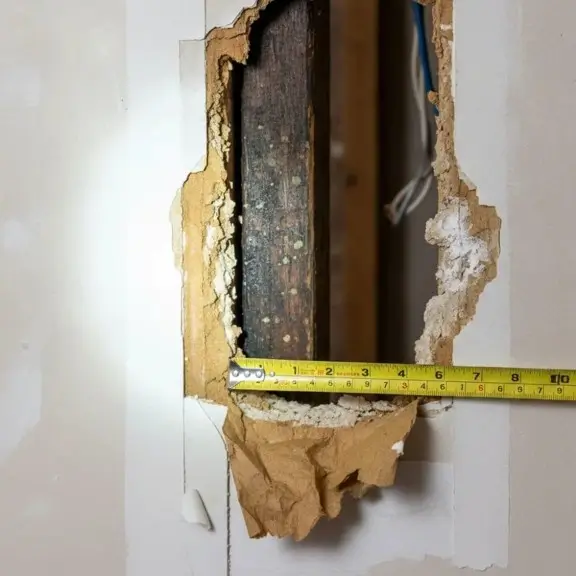
Gypsum board is basically compressed chalk wrapped in paper. Once it takes on water, the structure starts to break down. This happens fast in Marietta’s humid summer months, when indoor moisture already sits high before a leak even starts.
A few things tend to happen out of sight:
- Insulation behind the drywall gets saturated and stops doing its job
- Wood studs absorb moisture and can start to warp or grow soft
- Mold spores find a dark, damp space and start colonizing within 24 to 48 hours, according to the EPA.
- Electrical boxes and wiring inside the wall sit in a wet environment longer than you’d expect
None of that shows up as a stain on your wall. That’s the part that worries us most on a job.
I remember a call from a homeowner off Burnt Creek Road NW who thought a small ceiling spot from an upstairs bathroom leak was no big deal. She’d already painted over it once. When we opened the ceiling, the insulation above was soaked through and had been sitting wet for weeks. The drywall paper was already sloughing off in wet sheets. Paint had been hiding the real story the whole time.
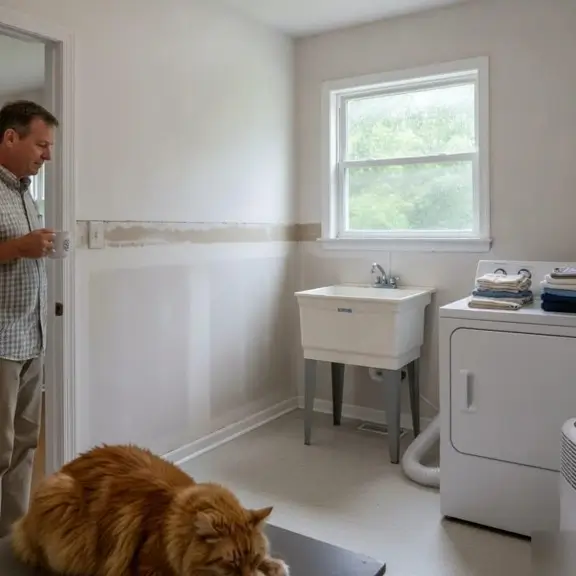
This is why we never rely on a visual check alone. As the EPA points out, a moisture meter measures the hidden moisture content of materials.. It reads the actual water content inside the material, not just what leaked through to the surface. We press it against drywall, baseboards, and studs in a grid pattern around the visible stain to map out how far the water traveled.
And this matters for a simple reason. If you only cut out the stained section and leave the surrounding wet drywall in place, you’re setting up a mold problem for later. Most people don’t realize this until they’re dealing with a second, bigger repair six months down the road.
So don’t judge the damage by what’s on the surface. A small stain can sit above a wall cavity that’s fully saturated. Or a wall that looks fine can already have mold growing where you can’t see it. The only way to know for sure is to test it properly, which is exactly what a water damage inspection is built to catch before it turns into something worse.
Key Signs Your Drywall May Need to Be Replaced
Water hits drywall and the clock starts. Some damage you can dry out and save. Some you can’t. So how do you tell the difference?
We’ve walked into homes across Marietta after burst pipes and storm floods, and the pattern is always the same. Homeowners want to believe the wall is fine because it looks okay from a few feet back. But drywall doesn’t lie once you get close.
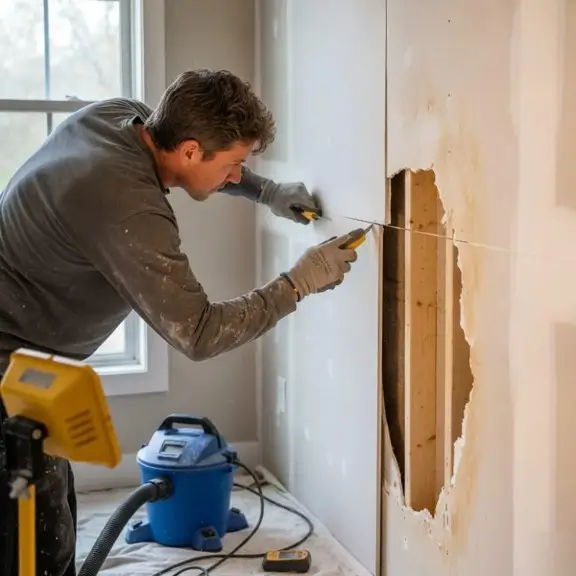
Here’s what tells us the wall has to come out, not just dry out.
- Sagging or bulging panels. Drywall is made of gypsum pressed between paper layers. Once it soaks up water, it swells. That swelling breaks down the gypsum core. A wall that bulges out from the studs has already lost its structure.
- Soft or crumbling spots. Push on the wall gently. If your finger sinks in or the surface flakes off, the material is failing. This isn’t a spot to patch. It’s a spot to cut out.
- Visible mold growth. Dark spots, fuzzy patches, or a musty smell mean mold has set in behind or on the surface. Georgia’s humidity gives mold a head start, often within 24 to 48 hours according to the CDC.
- Discoloration that keeps spreading. Yellow or brown staining that grows day over day tells you moisture is still moving through the wall. That’s an active problem, not an old one.
- Peeling paint or wallpaper. This usually means moisture is trapped just under the surface. It’s an early warning sign, and it’s worth checking before it turns into something worse.
Not every water event means a full teardown. A ceiling leak caught within hours might only need drying fans and a moisture check. But a basement flood in an older Marietta home, especially one with plaster-over-drywall construction from the 1960s and 70s, almost always means removal. The materials just weren’t built to handle standing water.
Here’s a scenario we see a lot. A family in a Marietta home has a water heater fail overnight. By morning, the lower two feet of drywall in the utility closet feels damp but still looks fine. Three days later, without proper drying equipment, that same wall is soft, smells sour, and shows the first gray specks of mold. What changed? Time and humidity. Nothing else.
And that’s the problem. Drywall damage often looks minor on day one and turns serious by day four. Waiting to see if it dries on its own is the single biggest mistake we see homeowners make.
One more sign worth mentioning, insulation behind the wall. If the insulation gets wet too, it holds moisture against the back of the drywall for days. The front of the wall can look dry while the back stays damp and moldy. This is why a moisture reading matters more than a visual check alone.
If you’re staring at a wall right now and you’re not sure which category it falls into, that uncertainty is normal. It’s also exactly why a proper water damage inspection exists, to give you a real answer instead of a guess.
Repair or Replace? A Scenario-by-Scenario Guide
Every water damage call is different. So the answer to replace or repair depends on what happened. Let’s walk through the situations we see most often in Marietta homes.
Scenario one: A slow ceiling leak from a roof issue. You notice a small brown ring on your ceiling drywall. It’s dry to the touch. No smell, no bubbling. This is often a repair job. A patch and some primer can handle it, once the roof leak itself gets fixed. But here’s the catch. If that stain has been there for months, moisture may have already worked into the paper backing. That’s why a proper water damage inspection matters before anyone touches paint.
Scenario two: A finished basement after heavy rain. Basement flooding cleanup in older Marietta homes near downtown often means drywall that sat in standing water for hours. This is almost always a replacement situation. Drywall acts like a sponge. Once it soaks past the first few inches, the internal structure breaks down. You can dry the surface, but the material inside stays weak and prone to mold.
Scenario three: A burst pipe caught within the first day. This one’s tricky. If you shut off the water fast and called for emergency water extraction right away, some sections might be salvageable. Drying equipment placed within 24 to 48 hours can sometimes save drywall that hasn’t fully saturated. We’ve walked into homes where fast action meant we only replaced the bottom two feet of a wall instead of the whole panel.
Scenario four: Any sewage backup. There’s no debate here. Replace it. Sewage carries bacteria and contaminants that no amount of drying will remove from drywall. This is a full removal and sewage backup cleanup situation, every time.
Here’s a quick way to think through your own situation:
- Water sat for less than 24 hours and drywall feels firm – repair may work
- Water sat for days or came from a flood – replace
- Water source was clean, like a supply line – repair is more likely
- Water source was contaminated, like sewage or floodwater – replace, no exceptions
- You see any soft spots, warping, or musty smell – replace
None of these rules replace an actual inspection. We’ve seen homeowners patch a wall that looked fine on the surface, only to find soaked insulation and hidden mold behind it two months later. That’s the real risk with guessing. A trained eye checks moisture levels inside the wall cavity, not just what you can see.
If you’re standing in your home right now trying to decide, don’t guess alone. Our team handles drywall water damage restoration and moisture detection across Marietta, and we can tell you within one visit whether that wall needs a patch or a full teardown. That single visit often saves homeowners from a bigger mold problem down the road.