Safety First: What to Check Before You Touch Anything
Water getting into your home is alarming. Your instinct is to stop the damage. But before you touch anything, check for hazards.
If water is anywhere near an outlet or an appliance, do not step into it. Call an electrician first. Georgia Power line workers see this kind of damage often, and so do local electricians across Marietta.
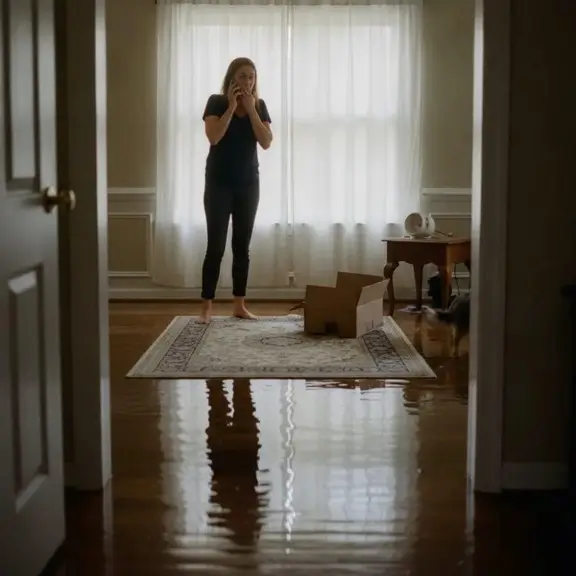
We walked into a home near Kennesaw Mountain last year where a homeowner had already tried to unplug a space heater sitting in two inches of water. She was lucky. That single decision could have ended very differently.
Here’s what you need to check before touch the water or do anything else:
- Is the water touching any outlets, cords, or plugged-in appliances?
- Can you smell gas anywhere near the damage?
- If the water is above another level, go down stairs and see if the ceiling below it is sagging or bowing?
- Does the water look clean, gray, or dark and foul-smelling?
- Are there cracks or shifting in the walls or floor?
A sagging ceiling means water has pooled above it. That weight can collapse without warning. Keep everyone out of both the flooded room and the room underneath it. And don’t be tempted to poke a hole in the ceiling yourself to “let it drain.” We’ve seen homeowners try this in older homes near Marietta Square, and it usually makes the mess worse, not better.
Smell matters more than people realize. Clean water from a burst pipe smells like almost nothing. Water from a sewage backup smells like sewage, no surprise there, but it also carries bacteria that can make your family sick. If the water looks dark or has any odor at all, treat it as contaminated. Stay out of it. Keep kids and pets away too.
Gas is another danger. Water can shift appliances, pull on gas lines, or loosen fittings you’d never notice on a normal day. If you smell gas at all, leave the house. Call your gas provider from outside. This isn’t the time to investigate further on your own.
Floor stability is easy to overlook. Wet subfloors can feel spongy or soft underfoot. If a floor feels different than normal, walk around it, not across it. Older homes in the Marietta area, especially ones built before the 1980s, sometimes have subfloors that weaken fast once they’re soaked.
Most homeowners want to jump straight into cleanup mode. We understand that instinct. Your home is your family’s safe place, and seeing it damaged feels like a personal attack. But rushing in before checking these things puts you at real risk. A flooded basement can wait ten more minutes for you to check for hazards.
Once you’ve confirmed the area is safe to enter, you’re ready for the next step.
Stop the Water Source and Shut Off Power Safely
Water keeps moving. Every minute you wait, it soaks deeper into your drywall, your subfloor, your family’s belongings. Your first job is simple. Find where the water is coming from and stop it quickly..
A burst pipe under your kitchen sink is different from a water heater leaking in the garage. But the goal is the same. Cut the source before you do anything else. We’ve been in Marietta homes where the homeowner spent twenty minutes grabbing towels before they ever touched the main shutoff valve. That delay cost them a hardwood floor.
Here’s the order that protects your home.
- Locate your main water shutoff valve. In most Marietta homes it sits near the water meter, usually in the basement.
- Turn the valve clockwise until it stops. You might need a wrench. But don’t force it if it feels stuck.
- If the leak is isolated to one appliance, like a washing machine or water heater, shut off that unit’s individual valve instead.
- Check your electrical panel. But, if water has reached outlets, switches, or the panel itself, do not touch it.
- Call an electrician or your power company if you’re unsure whether it’s safe to cut power yourself.
If your basement is flooding, and the water level is rising near outlets, stay out of that room. Seriously. Cobb County homes with older electrical systems can have outlets lower to the floor than newer construction. That’s a real risk.
So what do you do if you can’t find the shutoff valve? Look near your water meter first. Most Marietta properties built in the last thirty years have it in a similar spot, either in the garage, a utility closet, or outside near the foundation. Take a picture of it right now, before anything goes wrong.
A quick scenario. A homeowner near Kennesaw Mountain called us after a washing machine hose blew overnight. They found the valve behind the machine and shut it off in under a minute. Their damage stayed contained to the laundry room. Compare that to a family in East Cobb who didn’t know where their main valve was. Water ran for an hour while they tried to find the main shut off valve in a panic, then had to find a wrench, then they turned it the wrong way until finally they shut it off. The difference between those two outcomes was preparation.
Gas water heaters need one more step. Turn off the gas supply too, not just the water. And if you smell gas at any point, leave the house immediately and call your gas company from outside.
Once the source is off and the power is safe, you’ve done the hardest part. The next step is figuring out how much damage you’re dealing with, and that’s where a trained eye matters more than most people expect.
Know Your Water Type Before You Start Cleanup
Not all water is the same. Before you grab a mop or call anyone, you need to know what you’re dealing with. This one step changes everything about how you handle the mess in your home.
Water damage falls into three groups. Clean water. Gray water. Black water. Each one carries a different risk to your family.
Clean water comes from a supply line. A burst pipe. A water heater leak. An overflowing tub with no soap or waste in it. This water is safe to touch, at least at first. But it doesn’t stay clean for long. Give it 24 to 48 hours sitting in your drywall or carpet, and bacteria start to grow. What was clean yesterday is not clean today.
Gray water is a step up in risk. Think dishwasher overflow. Washing machine backup. A toilet that overflowed with just urine, no solids. This water has some contamination. You shouldn’t let kids or pets near it. And you shouldn’t touch it without gloves.
Black water carries the highest health risk. This is sewage or floodwater from outside your home. It’s water that’s touched soil, chemicals, or waste. Black water carries real pathogens. E. coli. Hepatitis. Parasites in some cases. Due to the potential for severe biological contamination, both the CDC and the EPA warn against any unprotected contact with these toxic waters
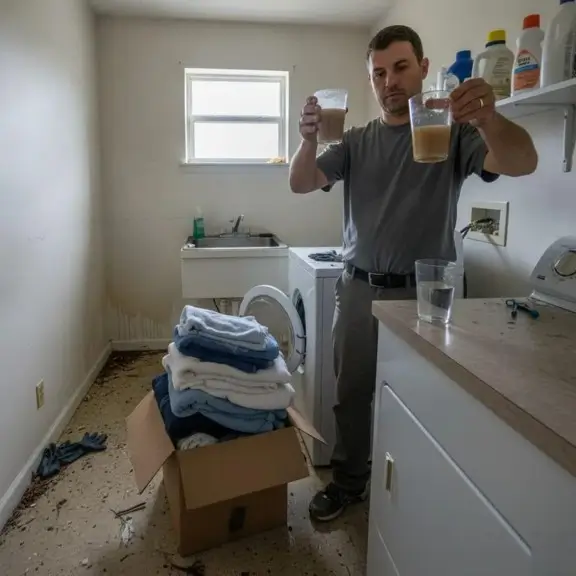
Here’s a scenario we’ve seen in Marietta. A homeowner near Kennesaw Avenue has a crawl space flood after a heavy storm. The water looks clear on the surface. They think it’s just rainwater, so they wade in with tennis shoes to grab a box of holiday decorations. What they don’t know is that water picked up runoff from the yard, maybe some soil bacteria, maybe some rodent waste for a crawl space that hasn’t been checked in months. That clear water was never clean.
So how do you tell the difference when you’re standing in it, panicking?
- Check the source. Did it come from a clean pipe, or did it come in from outside or a drain?
- Smell it. Sewage and standing floodwater usually have a sour or rotten odor.
- Look at the color. Cloudy, brown, or gray water means contamination.
- Consider how long it’s been sitting. Clean water left for more than two days should be treated as gray water.
We understand this is a lot to think through when your home is flooding. That’s the hard part about water damage. You’re scared, you’re rushing, and you still have to make smart calls.
Don’t let your kids near it. Don’t let your dog drink from a puddle in the basement. A quick call for a water damage inspection can protect your family from a health risk you can’t see with your own eyes.