
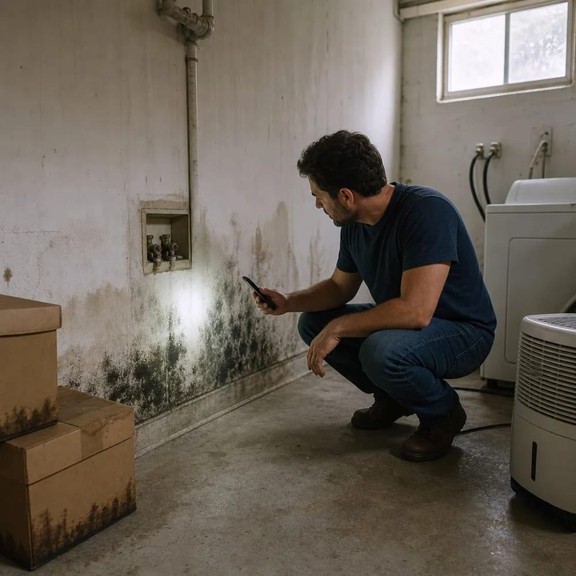
Why Mold Remediation Quotes Vary So Much
Mold remediation quotes vary because no two mold problems are shaped the same way. Size of the affected area, where it’s growing, what caused the moisture, and how much material has to come out all move the number. Two honest companies can look at the same house and write different scopes, so read what’s included before you compare anything.
You got three estimates. None of them match. That’s normal, and it usually isn’t because somebody’s lying to you. Testing is the key.
Mold remediation isn’t a product with a fixed part number. It’s a job shaped by your house. The square footage is a factor, so is what’s behind the wall. A patch of mold on finished drywall in a hallway is a different job than the same size patch inside a wall cavity wrapped around plumbing. One needs containment and demolition. The other needs a lot less.
What moves the number on a mold remediation estimate?
- Size and spread of the affected area, measured in square feet of contaminated material rather than room count
- Location and access, since crawl spaces, attics, and tight mechanical closets slow the work down considerably
- Porous versus non-porous materials, because drywall, insulation, and carpet get removed while tile and framing often get cleaned
- The moisture source, since a slow supply line leak behind a vanity is a different problem than groundwater pushing into a crawl space
- Containment requirements, meaning how much plastic, negative air pressure, and air filtration the job needs to keep spores out of clean rooms
- Whether independent mold testing or air quality testing is part of the scope before and after
That last one catches people off guard. Testing changes a quote. So does the decision to fix the water source versus just treating what’s visible.
We see this mistake all the time. A homeowner picks the lowest number without reading the scope, then finds out later that the estimate covered surface cleaning only. The wet insulation stayed. The mold came back in four months.
Marietta adds its own wrinkle. Plenty of homes sit on vented crawl spaces, and Georgia summer humidity does not play nice with a crawl space that has no vapor barrier. A crawl space mold remediation job can carry a bigger scope than a comparable basement job simply because a technician has to work on his back in eighteen inches of clearance. That’s slower work, and slower work shows up in the estimate.
So how do you compare quotes that look nothing alike? Line them up this way.
- Find the affected square footage on each estimate and confirm all three measured the same area.
- Check whether the moisture source is addressed or listed as somebody else’s job.
- Look for containment and air filtration as line items, not assumptions.
- Note what materials get removed versus cleaned in place.
- Confirm whether drying and moisture verification happen before rebuild.
- Ask if post-remediation testing is included or separate.
Once you’ve done that, the cheap quote usually explains itself. It’s cheaper because it’s smaller.
And sometimes smaller is correct. A small bathroom job genuinely doesn’t need a full containment build. The point isn’t to chase the biggest scope. The point is to know what you’re buying.
What Determines the Size and Scope of a Mold Job
Two homes on the same street can have wildly different mold jobs. One takes a day. The other takes a week and a half. That gap confuses people, and it should. So let’s walk through what drives it.
Scope isn’t guesswork. It comes down to a handful of things a technician checks before touching anything.
- Square footage of visible growth. Small surface patches under about ten square feet get handled very differently than growth spreading across a wall cavity.
- Where the mold is living. Attic sheathing, a crawl space, or behind bathroom tile each call for different containment and access work.
- What the mold is growing on. Drywall and insulation usually come out. Framing lumber and concrete can often be cleaned and treated in place.
- Whether the water source is still active. Mold is a symptom. A leaking supply line or bad grading keeps feeding it.
- How far spores have traveled. HVAC systems move spores through a whole house fast, and that turns a one-room problem into a whole-home problem.
That last one catches people off guard more than anything else. We see it all the time. A homeowner finds a patch in the laundry room and assumes that’s the whole story. Then testing shows elevated spore counts in three bedrooms because the return vent pulled everything through the ductwork.
Marietta adds its own wrinkles. Humidity sits high for most of the year, and a lot of homes in Cobb County were built with vented crawl spaces. Warm damp air gets under the house and condenses on cool joists. The mold doesn’t need a leak, it just needs that moisture cycle running month after month.
Older homes near the Marietta Square bring different issues. Plaster walls. Original framing. Tighter access. A technician has to work slower and protect more.
An example of how scope grows. A family off Roswell Road called about a musty smell in a guest bedroom closet. Nothing visible at first. Moisture readings on the shared wall came back soaked, and the source turned out to be a slow toilet flange leak in the bathroom on the other side. That job went from one closet to two rooms, a subfloor section, and a full drying setup. Not because anyone padded it. Because the water had been running quietly for months.
Mold starts colonizing damp material within roughly 24 to 48 hours, according to guidance from the EPA. Every day you wait, the affected area gets bigger and the containment gets more involved.
So what does that mean for you? A fast inspection usually keeps a job small. Waiting rarely does.
Cost Factors by Location in the Home
Where mold grows is as important as much as how much of it there is. A patch under a bathroom sink and the same size patch in a crawl space are two completely different jobs. Access, humidity, and what’s stored nearby all shift the work.
We see this every week in Marietta homes. Same square footage, wildly different scope.
These spots that come up most often, and what makes each one harder or easier to handle.
- Bathrooms and kitchens. Usually the smallest jobs. Mold sits on drywall or behind a vanity, and crews can reach it standing up. The catch is hidden water inside a wall cavity.
- Basements. Marietta has a lot of finished and partly finished basements. Mold often hides behind paneling or under carpet pad, so the tear-out is wider than what you can see.
- Crawl spaces. Tight, dirty, and slow to work in. Everything gets hauled by hand. Crawl space mold remediation almost always involves the subfloor and floor joists too.
- Attics. Heat, poor ventilation, and roof leaks make attics a repeat offender. Sheathing and rafters need treatment, and insulation usually comes out.
- HVAC systems and ductwork. Mold in the air handler spreads spores through every room. Containment gets more involved because the whole system has to be isolated.
Notice the pattern? The harder it is for a person to physically get to the mold, the more the job grows.
Access is the quiet cost driver nobody thinks about. A crew that can walk up to a wall works fast. A crew belly-crawling under a house with a respirator on works slow, and that time shows up in the scope. Same goes for attics in July, when Georgia heat turns a two-hour task into a carefully paced one with breaks.
Then there’s what surrounds the mold. Drywall comes out easily. Custom cabinetry, tile, hardwood flooring, and built-in shelving do not. A basement with a finished home theater has a lot more to protect and rebuild than an unfinished storage room with block walls.
Porous versus non-porous materials change things too. Mold on a concrete foundation wall can often be cleaned in place. Mold soaked into insulation, carpet pad, or particle board can’t be saved, it has to be removed and hauled out.
One more thing homeowners miss. Mold in a crawl space or attic rarely stays there. Air moves upward through a house, and spores ride along. That’s why a crawl space job sometimes includes air quality testing on the main floor, even when nothing looks wrong upstairs.
A Marietta family called us about a musty smell in a back bedroom last spring. Nothing visible anywhere. The source turned out to be standing moisture in the crawl space directly below, feeding mold on the joists. Fixing the bedroom smell meant fixing the crawl space.
Ask any contractor to walk you through the location, not just the square footage. It’s the fastest way to understand what you’re dealing with.
Frequently Asked Questions
How do I know if I have a mold problem or just a musty smell?
A musty smell often means moisture is trapped somewhere out of sight. You may not see mold yet, but the smell means spores are active. Check closets, crawl spaces, and walls near plumbing. In Marietta homes with vented crawl spaces, humidity can feed hidden growth for months before it shows on a wall. If the smell lingers after a few days of fresh air, get the area checked before it spreads further.
What’s the difference between mold cleaning and mold remediation?
Mold cleaning wipes away what you can see. Mold remediation finds and removes the source, then fixes the moisture problem behind it. Cleaning alone leaves wet insulation or damp framing in place. That’s why mold often returns within months after a surface-only fix. Remediation includes containment, material removal, and drying steps to stop the cycle for good. This distinction is a big reason quotes look so different between companies.
Why does mold keep coming back after I clean it myself?
Mold returns because the moisture source never got fixed. Wiping bleach on a wall kills what you see, but spores can survive inside porous material like drywall or insulation. If a leak or humidity problem keeps feeding that material, growth restarts fast. A proper inspection finds the water source first. That’s the step most DIY cleaning skips, and it’s covered in detail on our mold remediation cost guide for Marietta homes.
Why does humidity in Marietta make mold worse than in drier climates?
Georgia summers push moisture into crawl spaces and attics all season long. Warm damp air meets cooler surfaces under the house and condenses on joists. That cycle repeats daily without a single leak involved. Homes with vented crawl spaces around Marietta face this more than newer construction with sealed foundations. This is why local mold jobs sometimes need a bigger scope than a similar house in a drier state.
Can mold spread through my HVAC system into other rooms?
Yes, your HVAC system can carry mold spores through ductwork into rooms far from the original source. A patch in one closet can turn into elevated spore counts in several bedrooms. This happens because return vents pull air, and spores, through the whole house. If you’ve noticed a smell in multiple rooms with no visible mold, ask for air quality testing before assuming it’s isolated to one spot.
How fast does mold grow after a leak or flood?
Mold can start growing on damp material within 24 to 48 hours, according to the EPA. That’s faster than most homeowners expect. A small leak ignored over a weekend can turn into a real remediation job by the following week. Older homes near the Marietta Square with plaster walls and tighter access often need more careful work once mold sets in. Quick action after any leak keeps the job smaller and simpler.