What You Can Safely Clean Up Yourself
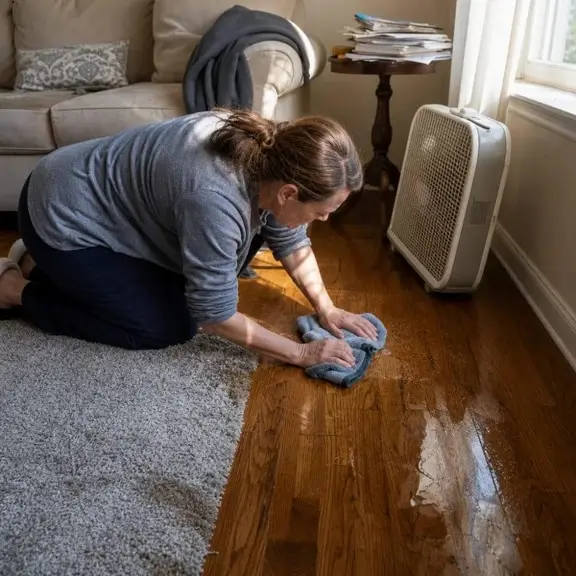
You can clean up small spills of clean water on your own with basic household tools. The safe zone covers leaks you catch within a day that stay on hard floors or a small patch of carpet. Anything bigger or dirtier calls for a different plan.
Not every leak needs a restoration crew. Some water problems are small enough for you to handle with towels and a fan. The key is knowing which ones fit that group before you start.
The IICRC S500 standard sorts water into three categories based on how clean it is. Category 1 water comes from a clean source like a supply line or a faucet. This is the type of water that’s safe for you to clean up yourself.
The situations below fall inside the safe zone for most homeowners. Each one starts with clean water and stays in a small area.
- A sink or tub that overflowed before you shut off the faucet
- A dishwasher supply hose that dripped onto tile or vinyl
- A small leak under the kitchen sink that you caught within a few hours
- A spilled mop bucket or pet water bowl on a hard floor
- A wet spot on carpet smaller than a bath towel
Each example has two things in common. The water is clean, and the wet area is easy to see and reach.
Time plays a big role in what stays safe. Clean water can turn into Category 2 water after about 48 hours as bacteria grow. Our humid Marietta summers can speed that up. A leak that sat over a long weekend may not be safe to touch anymore.
If your situation fits the safe zone, a simple process works well. Follow these steps in order.
- Turn off the water source and cut power to the room if water is near outlets.
- Soak up standing water with towels or a wet/dry shop vacuum.
- Lift rugs and move furniture off the wet floor.
- Run fans and a dehumidifier for at least 24 to 48 hours.
- Check the area each day for musty smells or soft spots.
We got a call last spring from a homeowner in East Cobb. Her washing machine hose split while she was home. She shut the valve within minutes and mopped up the tile. That was the right move.
But she noticed the baseboard felt soft a week later. Water had wicked up into the drywall behind it.
We see this mistake all the time. The floor dries fast, and people assume the wall did too.
So how do you know if the hidden spots are dry? A moisture meter from a hardware store can give you a rough reading. If the numbers stay high after two days, your drying isn’t working.
Many older homes around the Marietta Square sit over crawl spaces. Water from a first-floor leak can drip below the house where you can’t see it. Grab a flashlight and look under the floor after any leak that soaked through.
Your goal is to keep a small problem small. And it’s okay to stop and ask for help if the leak turns out bigger than you thought.
The Hidden Risks of DIY Water Damage Cleanup
Most DIY water damage cleanup starts with good intentions. You grab towels and a shop vacuum. The floor looks dry by dinner. But the water you can see is the smaller part of the problem.
Water moves into places your eyes can’t reach. It soaks into drywall and wicks up into the wall studs. It slips under baseboards and spreads across the subfloor. A wet-dry vac can’t pull moisture out of those materials.
We find hidden moisture in most homes where the owner tried to dry things out alone.
That isn’t a knock on anyone’s effort. The tools used in professional water damage restoration in Marietta measure moisture you can’t feel with your hand. Without them you’re making a guess. These are the risks we see most after a DIY attempt.
- Water near outlets or extension cords can create a shock hazard before you ever touch the mess.
- Floodwater and sewage backups carry bacteria that can make your family sick.
- Moisture trapped inside a wall cavity can grow mold on the back of the drywall where you won’t notice it.
- Wet subfloors and floor joists can weaken and begin to sag over the following months.
- Missing photos and moisture readings can make your insurance claim harder to support.
Any one of these can turn a weekend project into a much bigger repair. And some of them affect your health along with your house.
The type of water plays a big role in safety. The IICRC S500 standard sorts water damage into three categories based on how contaminated the water is. Category 3 water includes sewage and outside floodwater. That water calls for protective gear and professional disinfection. A mop and bleach won’t make it safe for your kids or pets.
Timing is the other big risk. The EPA says wet materials should be dried within 24 to 48 hours to help prevent mold growth. Georgia humidity makes that window hard to hit. In July a Marietta basement can stay damp for days with box fans running nonstop.
Last summer we helped a family near the Marietta Square after a water heater leak. They had run fans for four days. The carpet felt dry to the touch. Our moisture meter showed the drywall was wet 18 inches up the wall. Mold had started on the back of the paper facing.
So how would you know a wall cavity is dry without a meter? In most cases you wouldn’t.
Older homes add another layer of risk. Many houses around Marietta sit over crawl spaces. Water that drains below the floor can pool on the vapor barrier for weeks. You won’t see it unless you crawl under the house with a flashlight. By then the musty smell has reached your living room.
None of this means you did something wrong by starting the cleanup. Shutting off the water and moving your belongings are smart first steps. But the drying stage is where hidden damage takes hold, and it’s the stage that needs the right equipment.
That same focus carries through the practical water damage restoration marietta ga | 60-min guidance our team provides to local families.
Category 1, 2, and 3 Water: Why Classification Changes Everything
Before you start any cleanup, you need to know what kind of water is in your home. The restoration industry sorts water into groups based on how dirty it is. Most pros follow the IICRC S500 standard for these groups. The category tells you how much risk the cleanup puts on your health.
Each category calls for its own safety steps and its own cleanup methods.
- Category 1 is clean water. It comes from a sanitary source such as a broken supply line or an overflowing sink. This water does not pose a big health risk at the start.
- Category 2 is gray water. It holds contaminants that can make you sick. A washing machine overflow or a dishwasher leak falls into this group.
- Category 3 is black water. It carries bacteria and viruses that can cause serious illness. Sewage backups and rising floodwater belong in this group.
Clean water is the one type a homeowner might handle alone. The leak has to be small. You need to catch it within the first day.
Most people don’t realize that water can change categories. Clean water that sits for about 48 hours can turn into Category 2. It picks up dirt and bacteria from carpet padding and subfloors. Warm Marietta summers help bacteria grow faster in standing water.
We got a call last summer from a family near the Marietta Square. A supply line under their kitchen sink had leaked over a long weekend. They thought it was clean water and started to mop it up. But the water had soaked into the cabinets and subfloor for three days. By then it had become Category 2. The job needed antimicrobial treatment and pro drying equipment to keep mold from forming.
Black water is where DIY cleanup stops being safe. Sewage can carry E. coli and hepatitis A. Floodwater from Sope Creek or Rottenwood Creek can carry runoff from roads and yards. Carpet and padding that touch this water must be removed in most cases. Drywall that soaked up the water has to be cut out as well.
Our crews wear respirators and protective suits on every sewage job. A pair of rubber gloves from the hardware store will not protect you from what is in that water.
So how do you figure out which category you have? Walk through these questions before you touch anything.
- Find where the water came from and whether that source is clean.
- Think about how long the water has been sitting in your home.
- Check the water for a bad smell or a brown or gray color.
- Look at what the water has touched, such as carpet or drywall.
- Note whether the water came up from a drain or a toilet.
If any answer points away from clean water, step back and call a pro. And if the water came up through a floor drain or toilet, treat it as Category 3. Our team handles sewage backup cleanup in Marietta with the gear and training this kind of water requires.
Getting the category wrong is the most common mistake we see in DIY cleanups.
Frequently Asked Questions
How do I know if my water damage is safe to clean up myself?
You can likely handle it yourself if the water is clean and the area is small. Think sink overflows or a quick dishwasher drip caught within hours. This is called Category 1 water under the IICRC S500 standard. If the water sat longer than a day, came from outside, or touched sewage, it’s no longer a DIY job. When in doubt, check with a trained crew before you start scrubbing.
What’s the difference between Category 1, 2, and 3 water?
Category 1 is clean water from a safe source, like a broken supply line. Category 2 is water with some contamination, such as washing machine overflow. Category 3 includes sewage and floodwater, and it carries real health risks. Clean water can shift into Category 2 after about 48 hours as bacteria grow. Georgia humidity can speed that timeline up, so check your leak daily.
Why does my floor feel dry but the wall still feels soft?
Your floor dries faster than your walls because drywall and studs hold moisture longer. Water wicks upward behind baseboards even after the surface looks fine. A moisture meter can catch what your hand can’t feel. We’ve seen this happen in East Cobb homes where the tile looked dry in a day, but the wall stayed wet for a week. That hidden moisture is often where mold starts.
How does Marietta’s humidity affect DIY water cleanup?
Marietta’s humid summers make it harder to dry materials within the 24 to 48 hour window experts recommend. Box fans and open windows often aren’t enough when outdoor air is already damp. This is especially true for basements and crawl spaces common in older Marietta homes. If your space stays damp past two days, drying on your own likely isn’t working anymore.
Do older Marietta homes with crawl spaces need special attention after a leak?
Yes, crawl spaces hide water that you can’t see from inside your home. A first-floor leak can drip below the house and pool on the vapor barrier for weeks. Many homes near the Marietta Square sit over this type of foundation. Grab a flashlight and check under the house after any leak that soaked through the floor. If you find standing water or a musty smell, it’s time to call a professional.
When should I stop DIY cleanup and call a professional?
Call a professional once the water is dirty, the area is large, or it’s been wet more than a day. Soft baseboards, musty smells, or high moisture meter readings are also signs to stop. These point to damage hidden in walls, subfloors, or crawl spaces that household tools can’t fix. The water damage restoration Marietta GA 60-minute response team can check moisture levels professionally and stop small problems from growing bigger.