What Finding Rodent Droppings Really Means for Your Home
Rat and mouse droppings in your home tell you that rodents are living or feeding nearby. Dried droppings and urine can carry germs that spread through dust when the area is disturbed. Knowing what you found helps you decide if you can clean it yourself or if you need professional Rodent Droppings Cleanup.
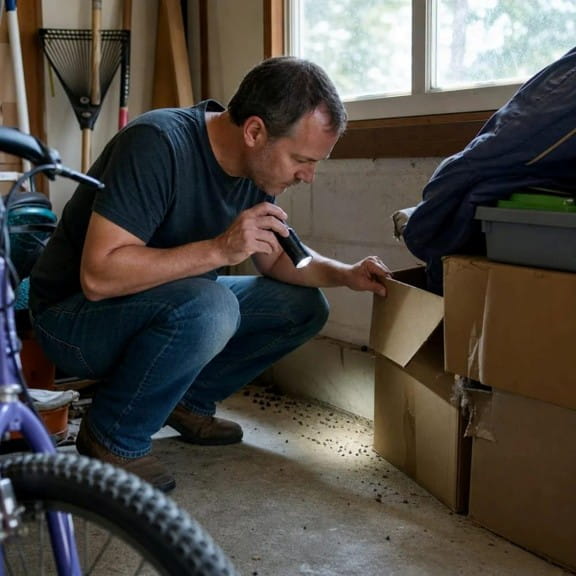
Fresh droppings are dark and moist with a shiny look. Older droppings turn gray and crumble when you touch them. A Norway rat dropping is about three-quarters of an inch long with blunt ends. A roof rat dropping is a bit smaller with pointed ends.
In Marietta we find most droppings in attics and crawl spaces. Many older homes near the Marietta Square have crawl spaces with gaps around pipes and vents. Roof rats climb trees and slip into attics through soffit gaps. Our humid Georgia summers keep these spaces warm and damp, which rodents like for nesting. Removing the rodents and removing their access to your building is the first
Mitigating the health risk is the next step. Rodent droppings and urine can carry germs that make people sick. The Centers for Disease Control and Prevention notes that hantavirus can spread when people breathe in dust from dried rodent droppings or urine. Sweeping or vacuuming stirs that dust into the air. That’s why you shouldn’t sweep droppings when they’re dry.
We see this mistake all the time. A homeowner finds droppings in the pantry and grabs a broom. The dust spreads across the shelves and floor. The area that needs cleanup now covers the whole room.
Last spring a family in East Cobb called us about a smell in their upstairs closet. They’d seen a few droppings near the water heater in the attic after having an infestation removed. We found a large nest inside the insulation above the bedrooms. The urine had soaked through the insulation and into the drywall. Those materials had to come out before we could disinfect the space.
Droppings in insulation create a different problem. Insulation traps urine and germs deep inside the fibers. Spraying disinfectant on top won’t reach that contamination. Soiled insulation needs to be removed and sealed in bags for disposal.
A few old droppings on a hard floor are something you can clean with care. A soiled insulation calls for professional Rodent Droppings Cleanup. Our team wears respirators and seals off the work area. We remove contaminated materials and disinfect each surface the rats touched. We can handle Odor removal as well to clear the urine smell from your home.
You don’t have to sort this out alone.
Health Risks You Need to Understand Before You Touch Anything
Rat and mouse droppings can carry germs that make people sick. You can’t see these germs. You also can’t tell a safe pile from a risky one by looking at it. The way you clean has a direct effect on your health.
The biggest risk comes from dust. Dried droppings and urine break apart when you sweep them. Tiny particles float into the air. When you breathe those particles in, the germs reach your lungs.
Most homeowners we meet in Marietta have swept up a few droppings before they call us.
That’s a normal first reaction. It’s also the step that puts you at the most risk. Rodents and their waste are linked to several illnesses. These are the ones we explain to families the most.
- Hantavirus can spread when you breathe in dust from dried droppings or urine. Norway rats can carry a type called Seoul virus.
- Leptospirosis is a bacterial infection that spreads when rodent urine touches a cut on your skin.
- Salmonella can reach your food if droppings land on counters or in your pantry.
Not every pile carries disease. You have no way to know which ones do. So it’s smart to treat every pile as a health risk.
The Centers for Disease Control and Prevention reports that hantavirus symptoms can show up one to eight weeks after exposure. Early signs feel like the flu. People get a fever and feel tired and achy. Over time the illness can make it hard to breathe. CDC data shows that about 38 percent of people who develop breathing symptoms from hantavirus pulmonary syndrome may die.
Some people in your home face more danger than others. Young children crawl on floors and put their hands in their mouths. Older adults and people with weak immune systems have a harder time fighting off infection. Pregnant women should stay away from the cleanup area as well. Keep anyone in these groups out of the room until it’s been disinfected.
Marietta’s warm and humid summers keep attics and crawl spaces damp. Moisture helps the bacteria in rodent urine survive longer on surfaces. We see this in older homes near Marietta Square. We also see it in houses with vented crawl spaces off Powder Springs Road.
Last spring a Marietta homeowner called us after she cleaned out her garage. She had used a shop vac on a corner full of droppings. The vacuum’s exhaust blew fine dust across the whole space. She didn’t feel sick. Her worry was for her kids, who played in that garage every weekend. We ended up treating the full garage instead of one corner.
So what should you avoid right now? Put the broom and the vacuum away. Don’t touch droppings with bare hands. A basic paper dust mask won’t stop the smallest particles. The safe steps come later in this guide.
If you get a fever and muscle aches within eight weeks of contact with rodent droppings, call your doctor. Tell them you were near rodent waste. That detail helps them test for the right illness.
Step-by-Step: How to Safely Disinfect Rodent Droppings
Cleaning rodent droppings the right way protects your lungs and your family. The CDC warns against sweeping or vacuuming droppings. Those actions can push dried particles into the air you breathe. The steps below follow the wet-cleaning method the CDC recommends for homes.
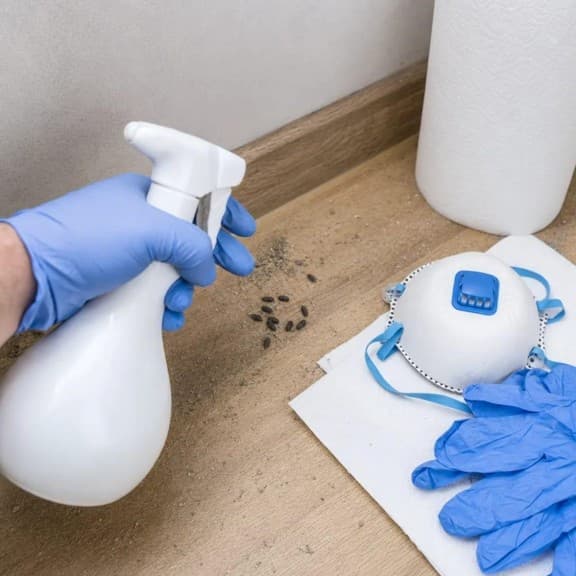
Gather your supplies before you start. You’ll need rubber or nitrile gloves and a fitted N95 respirator. Get paper towels and heavy plastic garbage bags too. Then mix a fresh bleach solution of 1.5 cups of household bleach in one gallon of water. That’s about a 1 to 10 ratio.
- Open the doors and windows. Let the space air out for at least 30 minutes before you go back in.
- Put on your gloves and your N95 respirator. Wear old clothes that you can wash in hot water after the job.
- Spray the droppings and any urine stains with the bleach solution until they’re soaked through.
- Wait five minutes. The bleach needs that time to kill germs on the surface.
- Pick up the wet droppings with paper towels. Drop them into a plastic garbage bag right away.
- Wipe the whole area with the same bleach solution. Clean nearby floors and cabinet shelves the rats could have touched.
- Seal the bag and place it inside a second bag. Put it in an outdoor trash can with a tight lid.
- Take off your gloves and wash your hands with soap and warm water.
We see people skip step four all the time. The five-minute wait gives the bleach enough contact time to work. Wiping before then can leave live germs behind on the surface.
A few habits can undo your hard work. Watch out for these common mistakes.
- Sweeping or dry dusting the droppings before they’re wet
- Running a household vacuum over the area
- Mixing bleach with ammonia cleaners, which creates toxic fumes
- Reusing a bleach solution that’s been sitting out for days
Some spots are much harder to clean than a kitchen floor.
Droppings in attic insulation can’t be soaked and wiped. That insulation often has to be bagged and removed. Crawl spaces under older Marietta homes can hold years of buildup in the dirt. And what about droppings inside your air ducts? Those can spread through the house each time your system turns on.
Last spring a family near the Marietta Square called us about their pantry. They had found droppings behind the cereal boxes and their attic held a larger nest. After the infestation was resolved, oOur team handled the clean up with full protective gear and HEPA air filtration.
A small cleanup in one cabinet is a job most homeowners can do. Large piles of droppings call for more protection. So do nests or rodents inside your walls. You shouldn’t have to guess about your family’s safety.
Frequently Asked Questions
How do I safely clean up rodent poop?
You safely clean up rat or mouse poop by spraying it with disinfectant first and never sweeping it dry. Let the disinfectant soak for at least five minutes to kill germs before wiping it up with paper towels. Wear gloves and a mask rated N95 or higher. Bag and seal the waste before throwing it out. If you find a nest or soiled insulation, that job needs professional Rodent Droppings Cleanup instead of a DIY approach.
How long do rodent droppings stay infectious?
Rodent droppings can stay infectious for days or even weeks, depending on moisture and temperature. Dried droppings break apart easily and release germ-carrying dust into the air long after the rodent is gone. Marietta’s humid summers can keep urine-soaked spots damp longer, which helps bacteria survive. You can’t judge how infectious a pile is just by looking at it, so treat every pile you find as a health risk until it’s disinfected.
How do I know if I can clean droppings myself or need a professional?
You can likely handle a small, isolated pile of old droppings on a hard floor yourself with the right gear. You should call a professional if you find a nest, soiled insulation, or droppings spread across an attic or crawl space. Insulation traps urine deep in the fibers, so surface disinfectant won’t reach it. If you’re unsure which situation you’re facing, our Rodent Droppings Cleanup team can check it out safely.
What’s the biggest mistake homeowners make when they find rodent droppings?
The biggest mistake is reaching for a broom or vacuum right away. Sweeping or vacuuming dry droppings stirs germ-carrying dust into the air you breathe. We see this often in Marietta garages and pantries, where a quick cleanup turns into a bigger problem across the whole room. Always spray droppings with disinfectant and let it soak before wiping. This one habit change protects your family far more than any cleaning product you choose.
Why do Marietta homes see so many rodent droppings in attics and crawl spaces?
Marietta homes see this because our warm, humid summers keep attics and crawl spaces damp, which rodents prefer for nesting. Older homes near Marietta Square often have crawl space gaps around pipes and vents, and roof rats use nearby trees to reach soffit gaps. That moisture also helps bacteria in urine survive longer on surfaces. If your home sits in one of these older neighborhoods, check attics and crawl spaces regularly for fresh signs.
Who in my household is most at risk from rodent dropping exposure?
Young children, older adults, pregnant women, and anyone with a weak immune system face the highest risk from rodent dropping exposure. Children crawl on floors and touch their mouths, while older adults and those with health conditions have a harder time fighting infection. Keep these household members out of the affected room until the space has been fully disinfected. A professional Rodent Droppings Cleanup removes that risk faster and more completely than waiting it out.