Why ‘Looks Dry’ Doesn’t Mean ‘Is Dry’
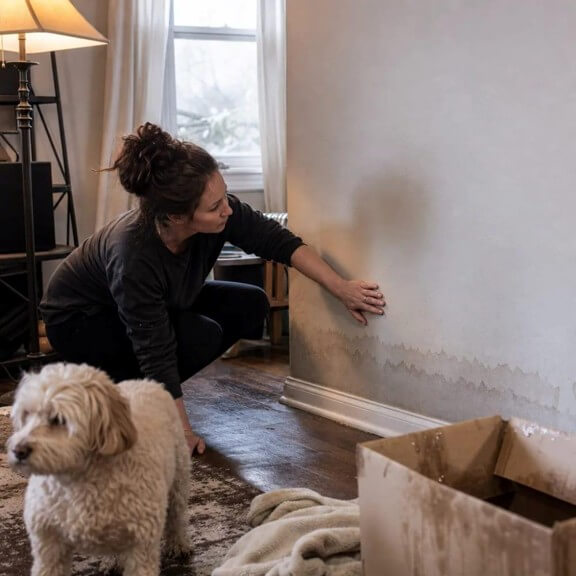
Drywall can feel dry to your hand while the core and the wall cavity hold water. A moisture meter reading is the way to know your walls are dry. Closing up a wet wall can lead to mold and rot behind the paint.
The surface of drywall dries first. Paint and the paper face lose water to the air in a day or two. The gypsum core behind that face can hold moisture for a week or more.
We see this mistake all the time in Marietta homes. A wall stops feeling damp, so the owner paints over the stain. A few weeks later the stain comes back with a musty smell.
Water moves down and sideways inside a wall. It soaks into the wood at the base of the wall and into the insulation. Relief Remediation checks these hidden areas so moisture is not left behind where it cannot dry.
Your hand can’t tell you what’s going on inside the wall.
Water hides in a few places after the surface looks fine. These are the spots we check first on every job.
- The wood bottom plate that sits under the drywall at floor level
- Fiberglass insulation packed inside the wall cavity
- The back side of baseboards and trim
- Drywall behind cabinets and tubs where air can’t reach
- Tile backer board in a bathroom near a leak
Each of these can stay wet for days after the paint feels dry to you. None of them show a sign on the surface until damage has started.
Marietta’s summer humidity makes this worse. Moist air slows how fast water leaves a wall. A humid room with no dehumidifier can take a lot longer to dry than a room with one running.
You need a moisture meter to know a wall is dry. We test a dry wall in another part of your house first. That reading gives us a baseline for your home. When the wet wall reads within a few points of that baseline, it’s dry. The IICRC S500 standard for water damage restoration uses this same approach.
Last spring we worked a job off Powder Springs Road after a water heater leak. The homeowner had run box fans for four days. The hallway wall felt dry to the touch. Our meter showed the bottom 18 inches at more than double the baseline reading. We cut a small inspection hole and found wet insulation and a damp bottom plate.
If that wall had been closed up, mold would have had a place to grow. The EPA says mold can start growing on damp materials within a day or two.
Soft drywall near the floor is a sign the core took on water. Bubbling paint and a wavy baseboard point to the same problem. Most people don’t realize that a stain can fade while the wall stays wet.
How Professionals Confirm a Wall Is Dry
A wall that feels dry to your hand can hold water deep inside. Drywall soaks up moisture from the bottom and pulls it upward. The paint on the surface dries first. The gypsum core and the wood studs behind it take much longer to release water.
Our technicians don’t guess when a wall is dry. We measure it with tools that read moisture below the surface. Then we compare those numbers to a dry wall in the same home. This process gives you a clear answer based on real readings.
- We take a baseline reading from a wall in your home that never got wet. This number becomes the dry goal.
- We scan the wet area with a thermal camera. Cooler spots on the screen can point to hidden moisture.
- We use a pinless meter to map how far the water spread across the drywall.
- We push a pin meter into the drywall and the bottom plate to check deeper readings.
- We record every reading on a moisture map and repeat the checks each day.
- We call the wall dry when its readings match the baseline for your home.
The baseline step is the one most people skip. A wall in a Marietta home won’t read the same as a wall in a dry desert state. Our long summer humidity keeps normal drywall readings a little higher in Cobb County. That’s why we set the dry goal with numbers from your own house.
A thermal camera is a helpful tool. It can’t confirm moisture by itself. Cool spots can come from air leaks or cold water pipes. We confirm what the camera shows with a meter reading every time.
Daily readings tell you whether the drying plan is working.
Last spring we worked on a house near the Marietta Square after a washing machine hose burst. The homeowner had run box fans for three days. The drywall looked fine and felt dry to the touch. Our pin meter showed high moisture in the bottom plate behind the baseboard. We pulled the baseboard and set up air movers with a dehumidifier. The wall reached its dry goal after two more days.
Closing a wall too soon can trap water behind new paint and patch work. The EPA notes that mold can start to grow on damp building materials within a day or two. A wall that tests dry before repairs gives your family that protection.
Ask any drying crew to show you their readings. A written moisture log is your proof that the wall is dry before anyone patches or paints it. Your insurance adjuster may ask to see this record too. We hand this log to every homeowner at the end of the job.
Structural drying is one stage of water damage restoration in Marietta. The moisture log shows when that stage is complete. After the readings hit the goal, repairs can begin with confidence.
That same focus carries through the practical water damage restoration Marietta GA 60-minute guidance our team provides to local families.
Why Faster Response Times Change the Drying Timeline
The first 48 hours after a leak have a big effect on how long your walls take to dry. We’ve seen the same kind of leak dry in four days in one home and take two weeks in another. The difference came down to when someone started the drying work.
Drywall starts to soak up water within minutes. The water moves up through the paper face and into the gypsum core. Wet insulation behind the wall holds water against the drywall and the wood studs. The longer water sits, the higher it climbs and the deeper it goes.
Each stage of waiting adds new work to the drying job. We see these changes on almost every call we take.
- In the first few hours, the water stays near the bottom of the wall and close to the surface.
- By the end of the first day, water can wick 12 inches or more up the drywall.
- The EPA says mold can start to grow on wet materials within a day or two.
- After several days, soaked drywall can sag or crumble and may need to be cut out.
Once mold shows up, the job gets longer. The wall needs mold remediation before anyone can call it dry. That step adds days to your timeline.
Most people we meet in Marietta wait because the wall looks fine. A wall can feel dry on the surface and still hold water inside. We check with moisture meters because your hand can’t tell you what’s going on behind the paint.
Last spring a family near the Marietta Square found a split washing machine hose after work. They called us that evening. We had the water pulled out and dehumidifiers running within a few hours. Their laundry room walls read dry on day four. They didn’t need any drywall replaced.
Local weather plays a part too. Marietta summers bring humid air that slows down drying. Damp air has less room to take in water from your walls. That’s why we set up dehumidifiers on the first visit instead of waiting to see how things go.
You can take a few steps while you wait for help. These steps won’t dry the wall on their own. They keep the damage from spreading while the pros are on the way.
- Shut off the water at the main valve if the leak is still running.
- Turn off power to the wet rooms if you can reach the breaker safely.
- Move furniture and rugs away from the wet walls.
- Take photos of the damage for your insurance claim.
- Run your air conditioner to pull some moisture out of the air.
Those steps buy you time. The real drying starts when the right equipment is in the room.
Frequently Asked Questions
How do I know if my wall is still wet after water damage?
A wall can feel dry and still hold water inside. Check for a musty smell, soft drywall, or a stain that keeps coming back after it fades. These signs point to moisture in the wall cavity or the bottom plate. A moisture meter gives the only reliable reading. That process is part of the structural drying work described on our water damage restoration page.
Can mold grow in 24 hours on wet drywall?
Mold can start growing on wet materials within one to two days, according to the EPA. This is why a wall that feels dry after a quick fan session can still be a risk. Mold growth often begins inside the wall before it shows on the surface. Waiting to see if mold appears before acting gives it time to take hold behind the paint.
Will a box fan dry my walls as well as professional equipment?
A box fan moves air but does not control humidity or measure moisture inside the wall. This means drying can take much longer, and wet spots can remain in the insulation or bottom plate even when the surface looks dry. Professional equipment pairs air movement with dehumidification and daily moisture checks. That combination is what confirms a wall is safe to close up.
How long can drywall stay wet before it needs to be replaced?
There is no fixed number of days that applies to every wall. The decision depends on moisture readings, whether the drywall has gone soft, and whether mold has started to grow. Drywall that stays wet for a week or more often needs a closer look. A moisture meter reading tells you more than counting days ever will.
Does Marietta’s humidity make walls take longer to dry?
Yes, humid air during Marietta summers slows down how fast water leaves your walls. Moist outdoor air brought in through open windows or vents adds to the problem. Homes near the Marietta Square with older plaster walls can hold moisture even longer under a layer of paint. Running a dehumidifier during these months helps keep drying on track.
What should I do while my walls are drying?
Keep the area ventilated and avoid painting or patching the wall until moisture is verified. Move furniture and rugs away from the wet spot so airflow can reach it. Watch for a musty smell or new staining, since these can signal the wall is still holding water. A moisture reading is the only way to confirm the wall is ready for repairs.