The First Steps to Take Right After Water Damage
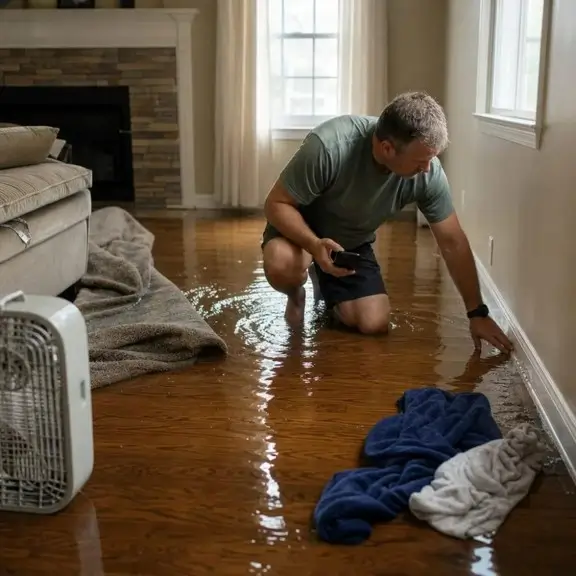
Your first job after water damage is to keep your family safe and stop more water from coming in. After that, you will want to record the damage and begin removing water from the house. For a larger loss, our water damage restoration page explains the professional drying process. The steps you take in the first day affect how much of your home can be saved.
Finding water in your home is stressful. You don’t have to fix everything today. You need to take a few steps in the right order.
Safety comes before anything else. Water and electricity don’t mix. If water has reached outlets or cords, turn off power at the breaker box. Don’t walk through a flooded room to reach the panel. Call your power company or an electrician if you can’t get to it from a dry spot.
Water from a toilet or sewer line needs extra care. Keep kids and pets away from it. Sewage water carries germs that can make your family sick, and it shouldn’t be cleaned with a mop and bucket.
Once you know the house is safe to walk through, work through these steps.
- Turn off the main water valve if a pipe or appliance is leaking. In many Marietta homes, you’ll find it in the basement or near the water heater.
- Take photos and videos of every wet room before you move anything. Your insurance company will want to see the damage as you found it.
- Call your insurance company to open a claim. Ask them what records they need from you.
- Move furniture and rugs off wet floors. Set wood furniture legs on foil or plastic blocks to keep stains off your carpet.
- Remove standing water with a wet vac or towels if the water is clean.
- Open interior doors and run fans if the power is safe to use. Keep air moving through the wet rooms.
These steps slow the damage down. But they don’t finish the drying job.
We see one mistake on a lot of our calls. People mop the floor and think the problem is gone. But water wicks up drywall and soaks into the pad under your carpet. It also seeps under hardwood and into the subfloor below it.
Last spring, a family near the Whitlock Avenue Historic District called us after their water heater leaked during the night. The floor looked dry by lunch. But our moisture meter showed water had climbed 18 inches up the wall behind the laundry room. None of it was visible to the eye.
Hidden moisture is the reason speed counts. Mold can begin to grow on damp materials in one to two days, according to the EPA. Marietta summers are humid. Damp air slows drying inside your home and gives mold more time to take hold.
So how do you know when it’s time to call for help?
Call a pro if water has been sitting for more than a day. You should also call if the water came from sewage. Wet ceilings and soaked walls are another sign you need professional drying equipment. And if you smell a musty odor, moisture is likely trapped somewhere you can’t see.
You’ve done the right thing by acting fast. The next step is making sure every wet area in your home gets dried out the whole way through.
Why Surface-Dry Doesn’t Mean Structurally Dry
Your floor can feel dry to the touch a day after a leak. That feeling doesn’t tell you much about what’s going on below it. Water moves down and sideways into materials you can’t see. It keeps moving after the puddle is gone.
Drywall soaks up water from the bottom edge. The paper face may feel dry while the gypsum core stays wet. Wood studs and subfloors can hold water for days. Carpet pad can stay soaked after the carpet on top feels fine to your hand. Insulation inside the wall traps moisture against the framing.
We see this mistake in Marietta homes all the time.
Our local weather makes the problem harder to fix on your own. Cobb County summers bring heavy humidity. Damp air slows the drying inside your walls. A box fan pointed at a wet wall in July won’t pull water out of the framing behind it. Many homes also sit over crawl spaces with red clay soil. That clay holds moisture and sends damp air up into the floor system.
The U.S. Environmental Protection Agency says mold can start to grow on damp materials in as little as one to two days. Hidden moisture gives mold a place to grow behind walls and under floors. You may not notice it until a musty smell shows up weeks later.
So how can you tell if water is hiding in your home? Watch for these signs in the days after a leak. Each one points to moisture that fans can’t reach.
- Baseboards that pull away from the wall or look swollen
- Paint that bubbles or peels near the floor line
- A musty smell that returns after you air out the room
- Hardwood boards that cup or lift at the edges
- Floors that feel soft or spongy when you step on them
Any of these signs means the drying isn’t finished. They call for a closer look with the right tools.
We use moisture meters and thermal cameras on every job. A meter tells us how much water is inside a stud or a sheet of drywall. A thermal camera shows cool spots where water is pulling heat from the wall. We compare those readings to dry areas in the same home. The work is done when the wet spots match the dry ones.
Last spring a family near West Side Elementary School called us after a dishwasher leak. They had run box fans for three days. The kitchen floor looked fine to them. But our meter found the subfloor under the cabinets was soaked. The water had spread about six feet past the area they could see. We pulled the toe kicks and set up drying equipment under the cabinets. And we checked the readings each day until the wood came back to normal.
Our water damage restoration team tracks moisture levels this way until your home’s framing reads dry. That daily proof can be reassuring before new flooring or paint goes in.
Most people don’t find hidden water until they tear out a floor to replace it. A moisture check now saves you from paying to fix the same room twice.
That same focus carries through the practical relief remediation water damage restoration guidance our team provides to local families.
The Crawl Space Blind Spot Most Homeowners Miss
Most of the water damage you can see is in the rooms you live in. The water you can’t see tends to end up below your floor. If your Marietta home sits over a crawl space, that space needs its own check after any leak or flood.
Water moves down. A burst pipe in your kitchen can soak the subfloor and drip into the crawl space below. Storm water can seep in through foundation vents and gaps in block walls.
We see this mistake in many older homes we visit. The homeowner dries the carpet and runs fans upstairs. The rooms look fine in a few days. But the crawl space stays wet for weeks because no one went down there to look.
Your floors can feel dry while the wood below them stays wet.
Many homes in Marietta were built over crawl spaces instead of slabs or basements. Our red clay soil holds water for a long time after heavy rain. Georgia summers bring thick and humid air that slows drying. These conditions can keep a crawl space damp long after the main floor feels normal.
So why does a wet crawl space matter to you? Floor joists and subfloor can soften over time. Mold can grow on damp wood and insulation. The EPA advises drying wet building materials within a day or two to help prevent mold growth. Air from the crawl space rises into your home, and it can carry musty odors and mold spores into the rooms your family uses.
You don’t have to crawl under your house to spot some warning signs. Watch for these clues in the days and weeks after water damage.
- A musty smell that gets stronger near floor vents or closets
- Floors that feel soft or bouncy when you walk across them
- Hardwood boards that start to cup or lift at the edges
- Indoor humidity that stays high while the air conditioning runs
- Standing water or sagging insulation when you shine a flashlight through the access door
Any one of these signs needs a closer look. More than one points to moisture that hasn’t left your home.
Please be careful if you check the space yourself. Crawl spaces can hold standing water near wiring. Turn off power to the area if you see water near electrical lines. Wear gloves and a mask because wet insulation and soil can carry mold and bacteria.
When our team inspects a crawl space, we start with moisture meters on the joists and subfloor. Those readings tell us how much water the wood is holding. After that, we remove standing water and pull out soaked insulation. We set up dehumidifiers and air movers sized for the space. We check the readings each day until the wood reaches a safe level.
One family off Polk St. NW not too far from Mountain View Park Cemetery called us about a smell in their hallway. Their water heater had leaked two months earlier. They had cleaned up the closet and thought the job was done. The water had run through a gap in the subfloor and soaked the insulation below. Mold had started on three joists by the time we got there.
After your crawl space is dry, think about how to keep it that way. A vapor barrier over the soil helps block ground moisture. Some homes do well with crawl space encapsulation because it seals the space from damp outside air.
Frequently Asked Questions
How long does it take for water damage to dry out?
Most Marietta homes need three to five days to dry out fully, but hidden moisture in walls or subfloors can take longer. Drying time depends on how much water got in, what materials it touched, and how humid the air is. Georgia summers add extra moisture to the air, which slows the process down. The only way to know drying is finished is to check moisture levels with a meter, not by touch or guesswork.
How can I tell if my house is dry after a leak?
Check for soft spots, musty smells, and baseboards that look swollen or pull away from the wall. These signs mean water is still trapped behind drywall or under flooring, even if the surface feels dry. A moisture meter or thermal camera gives you real proof, since your hand can’t feel water deep inside a wall stud. If you notice any of these signs days after a leak, the drying job likely isn’t done yet.
Should I try to dry out my house myself or call a professional?
Handle small, clean-water spills yourself, but call a professional once water sits more than a day or soaks into walls and ceilings. Box fans and open windows help surface drying, but they can’t pull water out of framing or carpet pad. Sewage water, humid Marietta weather, and homes near crawl spaces all raise the risk of hidden moisture. A pro brings meters and equipment that reach water your eyes can’t see.
Why does my floor feel dry but still have water damage underneath?
Your floor can feel dry on top while water keeps moving into the subfloor, pad, or wall framing below. This happens because water travels down and sideways through materials long after the puddle is gone. Many Marietta homes sit over crawl spaces with clay soil that holds extra moisture, which slows drying even more. A moisture check is the only reliable way to confirm the lower layers are dry too.
Does Marietta’s weather make water damage harder to dry out?
Yes, Marietta’s humid summers slow down drying and give mold more time to grow inside damp walls. The EPA notes mold can start growing on wet materials within one to two days, so humid air raises your risk. Homes built over crawl spaces also deal with damp air rising from clay soil. This local climate is a big reason surface fans alone often aren’t enough to finish the job.
What mistake do most homeowners make when drying out their house?
The most common mistake is assuming the job is done once the floor looks and feels dry. Water often climbs into drywall, soaks carpet pad, or sits under hardwood without any visible sign. We’ve seen this happen in homes near the Marietta Square, where moisture meters found water 18 inches up a wall days after the floor looked fine. For a full check of hidden moisture in your home, the water damage restoration process outlined on our main service page walks through exactly how we confirm a home is truly dry.