Wet Drywall and Water-Damaged Drywall Are Not the Same Thing
A lot of homeowners in Marietta think wet drywall and water-damaged drywall mean the same thing. They don’t.
Wet drywall got splashed or soaked recently with clear or gray water. It’s still holding its shape. The paper hasn’t broken down yet. Dry it fast and it can often bounce back fine.
Water-damaged drywall is different. It’s been in contact with contaminated water, like flood water, or it’s been wet with either clear or gray water long enough for the material itself to start failing. Mold can already be growing behind the surface where you can’t see it.
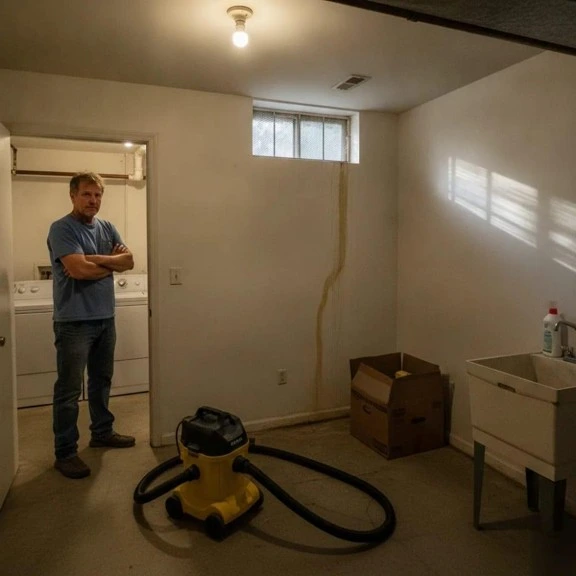
We get calls from homeowners who mopped up a leak, let the wall air dry, and figured they were done. But drywall doesn’t always show you the damage right away.
Here’s what tells us a wall has crossed from wet into damaged:
- The surface feels soft or spongy when you press on it
- You see bubbling, warping, or sagging in the panel
- There’s a musty smell that won’t go away
- The paint or wallpaper is bubbling or peeling
- You spot yellow or brown staining that spreads
If you’re seeing any of that, the drywall has likely broken down structurally. Drying it out at that point won’t undo the damage. The gypsum has already lost its integrity.
Time is the biggest factor here. As outlined by Georgia Restoration Authority, drywall that has been in contact with uncontaminated water has the best chance at being saved when dried out within 24 to 48 hours. Once you’re past that window, mold spores start finding a foothold. Marietta’s summer humidity doesn’t help. Warm, damp air behind a wall is basically an invitation for mold to move in.
We had a job last year in a Marietta basement where a homeowner assumed a small leak near the water heater was no big deal. She wiped it up and moved on. Three weeks later the drywall behind the appliance was crumbling to the touch. What looked minor on day one had turned into a full section that needed to come out.
That’s the thing about water damage. It doesn’t always announce itself.
So how do you know which category your wall falls into? The safest move is an inspection. Surface appearance can lie to you. Drywall can look dry on the outside while the core is still saturated and breaking down inside the wall cavity.
This is why a proper water damage inspection is an important first step before you decide anything. Guessing costs you more in the long run, either from replacing drywall too early or leaving damaged material in your home too long.
What’s Happening Inside When Drywall Gets Wet
Drywall looks solid from the outside. But inside, it’s mostly gypsum, a soft mineral pressed between two sheets of paper. That paper is the problem.
The moment water touches drywall, the paper facing starts to pull it in like a sponge. This happens fast. In a home in Marietta with a slab foundation or crawl space, humidity alone can start this process even without a visible leak. The gypsum core soaks up moisture next, and it swells. Once gypsum swells, it never fully returns to its original shape. That’s the part most homeowners don’t know.
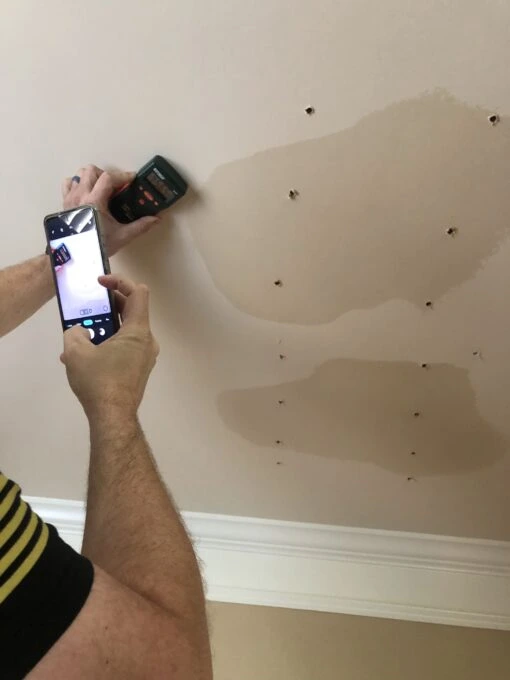
Here’s what’s really going on behind that wet spot on your wall:
- The paper facing softens and loses its bond to the gypsum core within hours
- The gypsum core absorbs water and expands, weakening its internal structure
- Joint tape and seams start to lift as the adhesive breaks down
- Mold spores, already present in normal household dust, begin feeding on wet paper within 24 to 48 hours
- Insulation behind the wall can hold moisture long after the surface feels dry
That last point matters a lot. We’ve gone to homes where the drywall felt dry to the touch, but the insulation behind it was still soaked. The wall looked fine. It wasn’t.
So how do you know if the damage is just cosmetic or something deeper? A quick touch test won’t tell you. Neither will a fresh coat of paint over a water stain. We use moisture meters that read the water content inside the material, not just the surface. That’s the only way to know what’s really happening behind the drywall.
Think about a burst pipe behind a bathroom wall. The leak might run for days before anyone notices a stain. By the time you see it, the water has already traveled. It moves along studs, drips into wall cavities, and pools at the bottom plate. The visible stain is often the smallest part of the problem.
Gypsum board also has almost no structural strength once it’s saturated. Press on wet drywall and you’ll feel it give. That softness means the internal bond between paper and gypsum has already failed. And once that bond fails, no amount of drying brings back the strength that was there before.
Here’s the part that surprises most people. Drywall doesn’t need to look ruined to be ruined. It can hold its shape, keep its color, and still be structurally compromised underneath. This is exactly why a moisture detection and removal inspection matters more than a visual check. Your senses can miss what a meter catches every time.
Save or Replace: Four Common Water Damage Scenarios
Every water damage restoration call is a little different. But after years of pulling wet drywall off studs in Marietta homes, we’ve noticed the same four situations come up again and again. Here’s how we size each one up, and what usually happens next.
Scenario One: The Ceiling Stain From a Slow Roof Leak
You notice a brown ring on your ceiling after a heavy storm rolls through Cobb County. The stain looks small. It’s been there a few weeks and hasn’t grown much.
This is often good news. Slow leaks sometimes only wet the surface paper, not the core. If the drywall still feels firm when you press on it, drying and repainting might be enough. We test moisture levels behind the stain before we say for sure. A stain alone doesn’t mean the whole ceiling has to come down.
Scenario Two: A Burst Pipe Behind a Wall
This one’s different. Burst pipes push out gallons of water fast, and that water usually soaks the drywall all the way through. We see this constantly in older Marietta homes with copper piping that’s finally giving out after decades of service.
By the time you find the wet spot, the wall cavity has likely been sitting full of water for hours. In cases like this, the drywall is almost always coming out. There’s no saving material that’s been fully saturated near a burst line. And, trying to save it just delays the real fix and risks mold setting in behind fresh paint.
Scenario Three: Basement Flooding After Heavy Rain
Marietta basements take a beating during our spring storms. Water comes in low, along the floor, and creeps up the drywall from the bottom.
Here’s the problem with basement flooding specifically. That water is rarely clean. It picks up soil, and sometimes it backs up from a sewage line nearby. Even if the drywall doesn’t feel soaked more than a foot up, we usually recommend removing that section entirely. Porous material near contaminated water isn’t something you want to gamble on, not with your family breathing that air every day.
Scenario Four: An Appliance Leak You Caught Quickly
Your water heater starts dripping, or the washing machine hose lets go overnight. You catch it the next morning. Maybe an inch of water sat against the baseboard for eight or nine hours.
This is often the best-case scenario we see. Quick discovery matters more than almost anything else in this job. If you act fast and get proper drying equipment running within that first day, a lot of drywall in these situations can be dried out and kept in place. We’ve saved entire rooms this way for Marietta homeowners who called us the same day they noticed the leak.
Four leaks, four very different outcomes. That’s the honest truth of this work. A stain isn’t a flood, and a flood isn’t a slow drip. Every one of these situations needs its own read, not a guess based on how the wall looks from three feet away.
Frequently Asked Questions
When should I call a professional instead of drying drywall myself?
Call a professional if you notice soft spots or a musty smell or if you suspect the wall has been wet for more than a few hours.. Small splashes can sometimes dry on their own. But, drywall that stays wet longer often hides damage inside the wall. A moisture meter finds what you can’t see or feel. If you are unsure, professional water damage restoration in Marietta can confirm whether the wall needs drying or replacement.
Does drywall that looks dry mean it’s safe?
No, dry looking drywall can still be damaged inside. The surface paper often dries faster than the gypsum core. This makes many homeowners think the wall is fine. Underneath, the core may still hold moisture and mold can grow unseen. Pressing on the wall or checking for a musty smell gives better clues than looks alone. A moisture check is the only sure way to know.
Does Marietta’s climate make drywall water damage worse?
Yes, Marietta’s humid summers speed up drywall damage. Warm damp air behind a wall gives mold a head start. Homes with crawl spaces or slab foundations feel this most. Moisture can build up even without a visible leak. This is why drywall in Marietta homes needs faster attention than in drier climates. Waiting even a few extra days can turn a small spot into a bigger repair.
Can water-stained drywall be repaired without full replacement?
Sometimes yes, if the stain only touched the surface paper. A firm wall that hasn’t lost its shape can often be dried and repainted. But a soft or sagging panel means the core has broken down. At that point, drying will not restore its strength. Testing moisture levels behind the stain tells you which situation you have.
How long does it take for mold to grow on wet drywall?
Mold can start growing within 24 to 48 hours of drywall staying wet. This happens because mold spores already live in normal household dust. Once paper backing gets damp, spores have what they need to grow. Georgia’s warm humid air speeds this process. Fast drying within that first day or two gives the best chance of avoiding mold growth.