Towels, water-rated absorbent socks, and mats can handle small spills. A wet/dry vacuum removes accessible standing water. Before using any of them, stay out if water could reach electrical equipment, sewage is present, or you see structural damage. Get professional help before entering.
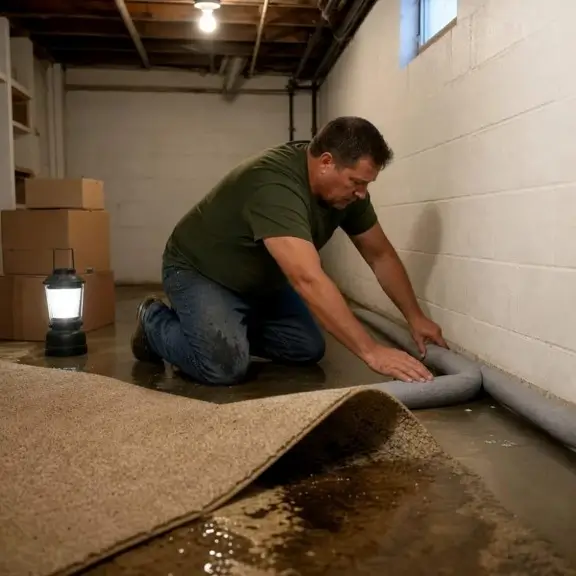
The right tool depends on whether you have a puddle, ongoing seepage, or damp building materials. Relief Remediation – Water Damage Restoration’s flooding basement cleanup includes checking where water has spread so cleanup goes beyond the visible floor.
What Soaks Up Basement Water and What It Misses
For a small, contained clean-water spill in an area safe to enter, choose a product suited to the surface and amount of water:
- Towels: Useful for small puddles on accessible floors. Replace or wring them out as they become saturated. A stack of towels is not a practical solution for continuing water entry or substantial flooding.
- Water-rated absorbent socks and mats: Help contain localized leaks or minor seepage. Check that the product absorbs water; some industrial absorbents are designed for oil and repel water. Replace saturated products as directed.
- Water-activated flood bags: Some products swell into barriers that block or redirect water. They are not interchangeable with indoor spill-absorption mats. Follow placement instructions and do not obstruct a working drain. Capacity and suitability depend on the product.
- Wet/dry vacuum: Extracts water rather than absorbing it. Use a model rated for liquid pickup, configured according to its instructions, only after electrical safety is established. Do not use a household dry vacuum or wet electrical equipment.
- Calcium-chloride moisture-absorber tubs: Collect moisture from the air. They do not remove standing water and should not be treated as equipment for drying a flooded basement. Keep the collected liquid contained and follow handling instructions.
Check the product label for liquid compatibility, capacity, replacement, and disposal instructions. A swollen bag may still leave water on the floor, and a saturated sock needs attention before a continuing leak spreads past it. Do not treat the advertised capacity as proof that the room is dry. If a product has contacted sewage or other contaminated water, keep it out of clean living areas and arrange disposal appropriate to the contamination. The same caution applies to towels used during cleanup.
After extraction, mechanical dehumidifiers remove moisture from the air while appropriate air movement supports evaporation. That is a separate task from soaking up puddles. Wet carpet pad, insulation, and concealed wall materials may also need access or removal, depending on contamination and damage.
A family in East Cobb used fans and towels after a spring storm and thought their carpet was dry. Two weeks later, the room smelled musty. Our moisture meter showed that the bottom foot of drywall was still wet behind the paint.
Their experience shows the limit of surface cleanup. The EPA’s mold and moisture guidance recommends drying water-damaged areas and items within 24–48 hours to help prevent mold. Do not wait for an odor before checking soaked walls or flooring.
On our jobs, moisture detection and mapping helps us track drying:
- We check affected walls and floors with suitable moisture-detection tools.
- We mark wet areas on a map of the basement so the same locations can be checked again.
- We recheck those spots each day during drying and compare readings with appropriate drying goals.
Meter readings need interpretation for the material being checked. Some concealed spaces need access to confirm conditions. The goal is to establish whether affected materials are ready for repairs, rather than assuming that a dry-feeling surface means the work is complete.
Why Basement Water Keeps Returning After Rain
If water returns after storms, buying more absorbent products addresses the cleanup rather than the source. Note where water first appears and whether it follows heavy rain, a plumbing leak, or a sump pump problem. Observe only from a safe location.
Red clay soil common around Marietta can retain water. Poor drainage beside the foundation can contribute to seepage, while groundwater pressure can drive water through cracks or joints. Humid summer air can slow evaporation; it does not itself explain where floodwater entered.
We receive calls from sloped lots near Kennesaw Mountain where runoff collects on the uphill side of the house. That pattern can help guide an inspection, but it does not establish the source in every home.
During basement assessments, we check potential entry points and drainage problems, including:
- Overflowing gutters or downspouts discharging beside the foundation
- Ground that slopes toward the house
- Foundation cracks, pipe openings, and the wall-to-floor joint
- A sump pump that has failed or lost power
- Window wells that collect water
Last spring, we helped a family in an older home near Marietta Square after three storms flooded their basement. They had been laying towels down for weeks. The sump pump worked, but a loose downspout was dumping roof water against the back wall. A ten-minute repair stopped most of the water entry.
That repair addressed a source the towels could not fix. Older drainage systems and deteriorated masonry may need further assessment, but a home’s age alone does not identify the cause. Keep a record of where and when water appears to help distinguish runoff, seepage, and plumbing problems.
Source correction and drying are separate jobs. Our moisture mapping helps locate affected materials and track drying progress. It does not repair gutters, foundation defects, or drainage systems, and drying alone cannot guarantee that another storm will not bring water back.
Moisture Barriers and Sealants Have a Different Role
Coatings, vapor barriers, and drainage membranes do not soak up puddles. Each addresses a different part of moisture control:
- Masonry coatings: Applied to suitable concrete or masonry to limit water penetration. Performance depends on the product, surface preparation, cracks, and water pressure.
- Vapor barriers: Materials designed to limit water-vapor movement. Placement must suit the wall or floor assembly so it can manage moisture and dry as intended.
- Drainage membranes: Part of systems that direct water toward a drain or sump. They need a working discharge route and suitable installation.
We have seen coating failures in older homes near Marietta Square: walls looked dry for a few months, then a spring storm brought water in at the base. The coating flaked away, and the carpet and lower drywall became soaked.
That pattern calls for investigating the water entry and the coating system. It does not mean every waterproofing coating fails under pressure. Some products have pressure ratings or allow damp-surface application; others require different preparation or conditions. Follow the specific manufacturer’s instructions rather than a blanket rule.
A membrane installed without considering the full wall assembly can also restrict drying and conceal moisture against framing or drywall. Have the design assessed before covering an affected wall. Musty odors or chalky concrete deposits warrant investigation, but do not by themselves identify the right coating or barrier.
For a basement with standing water, resolve safety hazards and the water source before coating work. Assess damaged materials, complete necessary cleanup, and verify the surface conditions required by the chosen product.
Our moisture readings can identify areas needing further drying or investigation. Coating readiness may require a manufacturer-specified moisture test, along with checks for surface preparation and other conditions. A handheld meter reading alone does not establish that every concrete coating is ready to apply.
Choose the Tool and Address the Cause
Use absorbent products for suitable small spills, extraction equipment for accessible standing water, and a drying plan for affected materials. If flooding returns, investigate the source. No towel, bag, coating, or moisture-absorber tub is a substitute for that assessment.
Frequently Asked Questions
What materials soak up small basement spills?
Towels and water-rated absorbent socks or mats can help with small, contained clean-water spills. Follow the product instructions, replace saturated materials, and first establish that the area is safe to enter.
Will moisture-absorber tubs remove standing water?
No. Calcium-chloride tubs collect moisture from the air. Standing water needs physical removal, and flooded building materials may require controlled drying, cleaning, or removal.
When is a wet/dry vacuum appropriate?
A vacuum rated for liquid pickup can remove a small amount of accessible clean water after electrical safety is established. Follow its setup instructions. Do not use wet equipment or enter potentially electrified water.
When should I get professional help?
Get prompt help for substantial flooding, sewage or unknown contamination, electrical hazards, or soaked walls and flooring. Do not wait for a musty smell or visible mold before having hidden moisture assessed.
Why does water return after rain?
Possible causes include poor grading, gutter or downspout problems, foundation openings, window-well drainage, and sump pump failure. Retained water in local red clay can contribute where drainage is poor. Inspection helps identify the cause.
Can sealants or barriers prevent another flood?
They may help as part of an appropriate moisture-control system, but suitability depends on the source, construction, and product. Coatings, vapor barriers, and drainage membranes serve different purposes and do not replace necessary drainage or structural repairs.