Stay out of a flooded basement if water could reach electrical outlets or equipment, sewage is present, or you see signs of structural damage. Get professional help before entering.
Even when the floor looks dry, moisture can remain inside walls, carpet padding, and wood framing.
For help assessing the damage, see how Relief Remediation – Water Damage Restoration handles flooding basement cleanup. A dry-looking floor is a starting point, not proof that the basement is ready for repairs.
Why Looking Dry and Being Dry Are Not the Same Thing
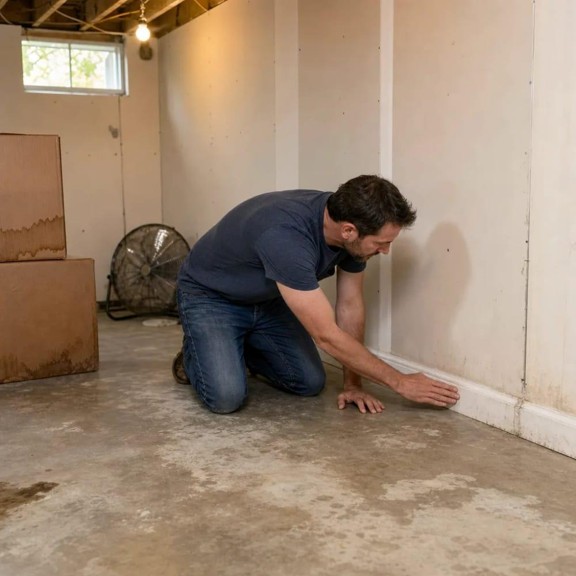
Water can soak into porous building materials and remain after exposed surfaces feel dry.
Drywall can wick moisture above the visible waterline. We’ve measured wet drywall two feet above it in Marietta basements, even where the paint still looked normal.
Common places we find hidden moisture include:
- Drywall behind baseboards and insulation inside finished walls
- Carpet pad beneath a dry-feeling carpet surface
- Wood studs and sill plates at the concrete floor
- Concrete slabs and foundation walls that absorbed water
Fans blowing across the floor may not adequately dry these areas. Hidden moisture can damage materials and support mold growth, even before you notice a stain or odor.
The EPA’s mold and moisture guidance recommends drying water-damaged areas and items within 24–48 hours to help prevent mold. That is a reason to act promptly, not a guarantee that mold will appear at a specific hour.
Last spring we helped a family near Marietta Square after a storm flooded their basement. They ran box fans for four days and thought the job was done. Three weeks later, a musty smell appeared in the family room. Our moisture meter showed the bottom of the drywall was still wet, and the insulation behind it had started to grow mold.
The family’s experience shows why appearance alone cannot confirm that drying is complete. Our team uses moisture detection and mapping to:
- Check affected walls and floors for moisture.
- Compare readings with unaffected areas of similar material in the same home.
- Track progress toward appropriate drying goals before repairs begin.
Readings need professional interpretation; different materials have different drying goals. The results help us decide what can be saved and what needs removal.
A meter reading is one part of the inspection. The meter, material, and location of the reading all affect how we interpret the result.
Accessible drywall can be checked directly. Flooring layers or a closed wall may require a different approach. The moisture map records affected areas so we can check them again before damaged finishes are replaced.
Why Natural Drying May Not Be Enough
Natural drying relies on evaporation without a controlled drying setup. How well it works depends on the water source, amount of water, materials affected, temperature, humidity, and airflow. A small clean-water spill on an accessible surface is different from flooding that reaches finished walls or soaks carpet pad.
Air movement can help moisture evaporate, but the moisture also needs a way out of the room. In a humid basement, fans alone may leave materials wet. Opening windows helps only when outdoor conditions support drying; Marietta’s humid summer air can add moisture instead.
The red clay soil common around Marietta can retain water. Where drainage is poor, wet soil beside the foundation can contribute to continued seepage. Drying equipment cannot solve an ongoing leak or drainage problem by itself.
Last summer, a family near Marietta Square called about a week after their sump pump failed. They had run three box fans for six days. The carpet felt dry on top, but our meter showed wet drywall 14 inches up the wall. The carpet pad was soaked, and a faint mold odor had developed in one corner.
That sump pump failure left water in materials the fans had not adequately dried. You do not need to wait for a musty smell or stalled drying before seeking help.
Standing water, soaked porous materials, water inside wall cavities, or an uncertain water source warrant prompt assessment. Sewage and other contaminated water require cleanup suited to the contamination, not simply evaporation.
For basement flooding cleanup in Marietta, our team uses commercial dehumidifiers and air movers, along with moisture detection and mapping. Dehumidifiers remove moisture from the air while air movers support evaporation. We monitor affected materials so repairs do not cover areas that are still too wet. Depending on the damage, access openings or removal of unsalvageable materials may be needed.
The equipment plan should fit the conditions in the basement. Simply adding more fans does not establish whether the carpet pad is salvageable, whether insulation is wet, or whether water is still entering. Those questions affect both the cleanup and the repairs that follow. Identifying the source early also helps distinguish a one-time plumbing failure from stormwater entering around the foundation or a sump pump that needs attention.
Signs Your Basement Still Has Hidden Moisture
Once the space is safe to enter, these clues can help you spot a moisture problem:
- A persistent musty or earthy smell
- Bubbling paint, swollen baseboards, or soft drywall near the floor
- Cool, damp carpet or pad, or dark stains that spread
- White, chalky deposits on concrete
- Condensation on cold pipes or basement windows
These signs call for investigation, but they do not prove that floodwater remains in a specific wall or floor. White deposits can be residue from earlier moisture movement; condensation can reflect high indoor humidity. Conversely, hidden moisture may produce no obvious warning signs.
Last year we checked a finished basement near East Cobb after a water heater leak. The owner had cleaned up, and the carpet felt dry. Our moisture meter showed high readings in drywall three feet from the leak. When we opened the wall, mold had started growing on the back of the drywall.
In the East Cobb home, moisture readings helped us find damage beyond the original leak. Our team uses moisture meters and thermal cameras to identify areas that need closer inspection.
Thermal cameras show temperature differences, not moisture directly. We confirm suspected wet areas with suitable checks, then use moisture mapping to record where the water traveled and how readings change during drying.
An inspection can often begin without opening walls, but concealed spaces may require access to confirm damage or allow drying. If we find signs of growth, a mold inspection is the next step. Have affected materials assessed before installing new flooring or closing a repaired wall.
Tell the inspector where the water first appeared, which rooms it reached, and what cleanup has already been done. A water heater leak, sump pump failure, and storm flood can leave different patterns of damage. Point out odors and changes in finishes even when they are away from the original puddle. That history helps guide the inspection without assuming that every mark or cool surface is evidence of new flood damage.
Will Your Basement Dry on Its Own?
A flooded basement may look dry before the affected materials have dried enough for repairs. Address the water source and safety hazards promptly, then use an assessment and moisture checks to guide cleanup. Do not rely on appearance alone or wait for a musty smell.
Frequently Asked Questions
How do I know if my basement is dry or just looks dry?
Touch and appearance can miss moisture inside building materials. Moisture readings, compared with appropriate drying goals and unaffected materials, help confirm progress before repairs.
Can I just use fans to dry out my flooded basement myself?
Fans can support evaporation, but flooding may also require water extraction, dehumidification, and access to wet materials. Get prompt help for soaked walls or flooring, significant flooding, or water of uncertain cleanliness.
Is it safe to enter a flooded basement?
Stay out if electricity may contact water, sewage is present, or the structure appears unsafe. Have the hazards assessed before entering. Do not step into water to reach a breaker or plug in equipment.
Why does Marietta’s weather make basement drying harder?
Humid summer air can slow evaporation or add moisture through open windows. Local red clay can retain water; poor drainage beside the foundation may contribute to seepage that must be addressed.
How long does it take for mold to start growing after a flood?
Mold can develop quickly when materials remain damp. The EPA recommends drying water-damaged areas and items within 24–48 hours to help prevent growth. Do not treat that window as a safe waiting period.
What signs suggest my basement still has moisture?
Musty odors, soft drywall, swollen baseboards, damp carpet, and spreading stains warrant investigation. Concrete deposits and condensation can also signal moisture issues, but none of these clues replaces an assessment.